
Ingredients & Spices · The complete guide
Millet flour (Bajra atta)
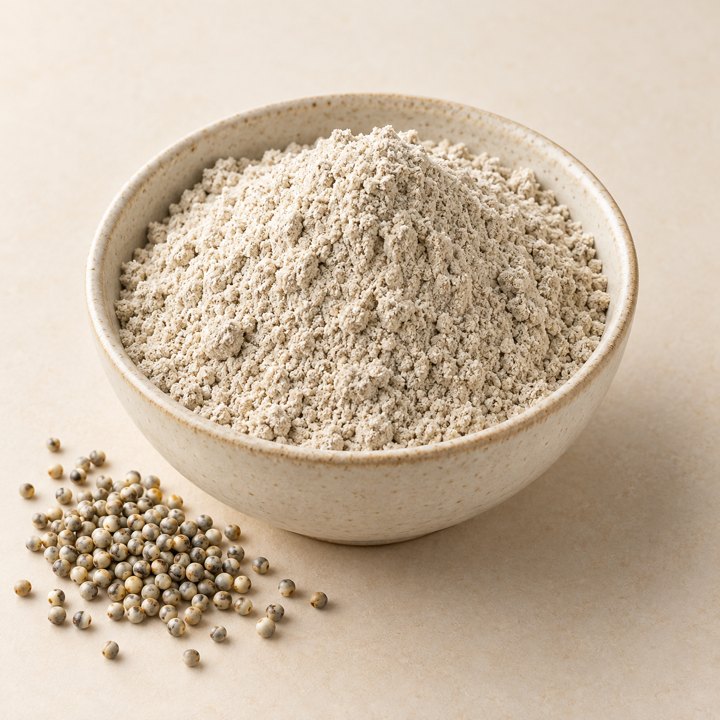
Bajra atta is the specific millet flour intended for bajray ki roti here. It is usually wholegrain and slightly coarse compared with refined maida, with a pronounced earthy flavour.
What it is and what to buy
Bajra atta is the specific millet flour intended for bajray ki roti here. It is usually wholegrain and slightly coarse compared with refined maida, with a pronounced earthy flavour. A multigrain flour may include wheat and other millets, and is a different product. Freshness is especially important: a bitter stale taste can overwhelm the roti even when the flour looks normal. Buy a small, clearly identified food-grade packet if you do not use it frequently.
In these recipes, millet flour means pearl-millet flour, known as bajra atta, rather than a blend of every crop marketed as millet. Pearl millet is Cenchrus americanus, formerly widely named Pennisetum glaucum. Other millets, including finger millet and foxtail millet, are different grains. Wholegrain bajra flour has a greyish colour and distinctive earthy flavour. It contains no wheat gluten, so its dough handles differently from atta.
Origins and food history
Kew describes pearl millet domestication in Africa’s Sahel roughly 4,000 to 5,000 years ago, followed by spread through Africa and into the Indian subcontinent. Its importance in Pakistani rural food traditions reflects this long history of crop movement and adaptation. It was not discovered by a named modern person. The date of domestication is an approximate archaeological account, not an exact invention date for bajray ki roti.
Reference: Kew: pearl millet history.
Growing regions, trade and Pakistan
India, Niger, Nigeria, Mali and Senegal are established pearl-millet-growing countries. Pakistan also grows bajra, including in dry agricultural environments, for grain and other uses. The ability of the crop to tolerate difficult conditions does not make every harvest identical in quality. Food flour should be clean, freshly milled and clearly identified. Feed grain or a mixed millet product is not necessarily suitable for a recipe written specifically for fine pearl-millet flour.
Reference: Kew: pearl millet history.
How to prepare and cook it
Use warm or hot water as directed and bring the dough together while it can still be handled safely. Pat or roll carefully because pure bajra lacks the stretch of wheat atta. Cracked edges often indicate that the flour needs more hydration or a different shaping method. Cook on a properly heated tawa and finish as the recipe directs, serving promptly. A little ghee can improve the eating texture but should be counted as an added fat rather than attributed to the millet itself. Make a small test roti before shaping the whole batch.
Put this form of the ingredient to work in Bajray Ki Roti. The method in each recipe determines whether it should be raw, soaked, ground, freshly cooked or chilled before it enters the dish.
Nutrition, benefits and their limits
Whole pearl-millet flour provides carbohydrate, fibre, protein and minerals. Retaining the whole grain preserves more of the original grain components than highly refined starch. Mineral content and absorption vary with variety, processing and the rest of the meal, so a general claim that bajra alone cures anaemia is unjustified. It can add useful variety alongside wheat, rice and pulses. A roti’s final energy content also reflects any ghee or butter spread over it.
Allergies, disadvantages and safe handling
Pearl millet is naturally free from wheat gluten, but shared milling can introduce wheat. Use a suitable labelled product when strict avoidance is necessary. Individual allergy is possible. Like other cereal flours, it should be cooked, not eaten as raw dough. A rapid increase in wholegrain fibre can be uncomfortable for some people. People managing a medical condition should base restrictions on their actual diet and clinical advice rather than blanket internet claims about traditional grains.
Practical substitutions
Other millet flours vary in flavour and structure and need adjusted hydration. A deliberate wheat-atta blend is easier to roll but introduces gluten. Maize flour makes a different traditional roti and cannot be assumed to need the same water. A tested alternative recipe is better than a blind flour swap.
Keeping it fresh
Bajra flour can become bitter or rancid relatively quickly after milling because grain oils and enzymes are exposed. Buy smaller amounts and store airtight in the refrigerator or freezer when the kitchen is warm. Keep moisture out and label the milling or purchase date. Reject stale, damp or musty flour. Make dough close to cooking time and chill any prepared dough promptly; freshly cooked roti is usually more pliable than a dried-out stack held for many hours.
For related ingredients and shopping terms, see the Pakistani ingredients and spices pantry guide.
Names and forms used in our recipes
View the recipe names covered by this guide
- millet flour
- pearl-millet flour
Frequently Asked Questions
Is millet flour always bajra?
No. Millet is a broad trade category. This recipe means pearl millet, bajra.
Can I knead bajra dough like atta?
It will not develop the same elastic gluten network. Hydration, warmth and gentle shaping matter more than extended kneading.
Keep Exploring
Related places and stories on DailyLife.pk

How we know this
- Type Explainer
- Sources 4 (3 official/academic)
- Reviewed November 2026
- Disputed points None
Photo credits (1)
- Bread Dough.jpg, Krish Dulal, CC BY-SA 4.0, via Wikimedia Commons
