
Ingredients & Spices · The complete guide
Barley (Jau)
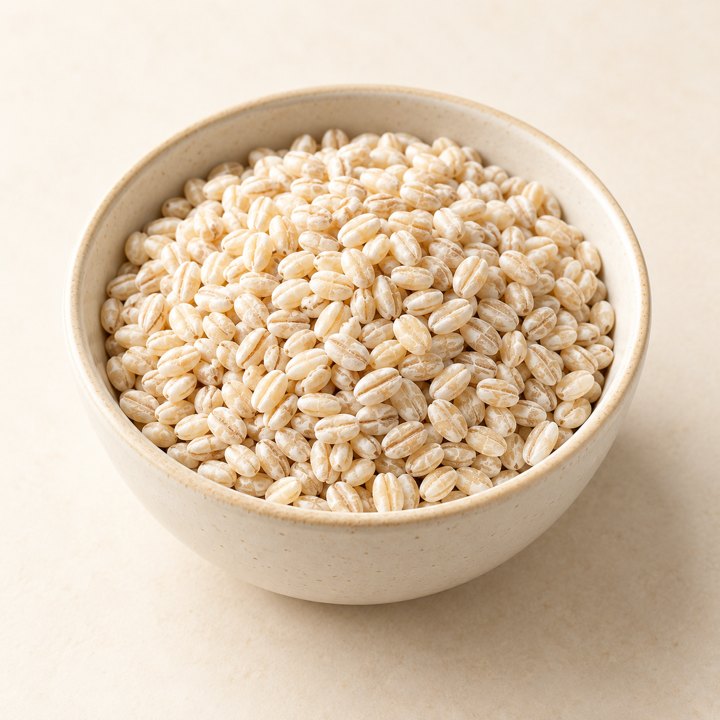
The pearl barley used here is polished food-grade barley, selected because it softens into a creamy grain mixture. It has a mild, nutty flavour and a pleasantly chewy centre before prolonged cooking.
What it is and what to buy
The pearl barley used here is polished food-grade barley, selected because it softens into a creamy grain mixture. It has a mild, nutty flavour and a pleasantly chewy centre before prolonged cooking. Pearl barley is not automatically a wholegrain food, because pearling removes portions of the bran. A packet of instant barley or barley flakes hydrates differently and should not be measured into a long-cooked haleem as if it were the same grain.
Barley is Hordeum vulgare, a cereal called jau in Urdu. Hulled barley has its inedible hull removed but retains much of its bran. Pearl barley is abraded more extensively to create pale, rounded grains that soften more quickly. Pot barley is less polished than many pearl products, though trade descriptions vary. Barley flour, flakes and malt are further forms and should not be confused with the whole pearled grains used in a pot of haleem.
Origins and food history
Barley was domesticated in the broader Fertile Crescent agricultural tradition and is among the world’s early cereal crops. It spread through ancient farming systems into South Asia and beyond. Historical use as food, animal feed and brewing grain does not identify a single discoverer. Pearling is a later processing choice; the age of barley cultivation does not establish an equally ancient date for a specific modern packet or regional recipe.
Reference: CGIAR Genebanks: barley origin.
Growing regions, trade and Pakistan
Russia, Australia, France, Germany, Canada and Türkiye are established barley-producing countries. Pakistan also grows barley, though wheat has a much larger role in everyday cereal meals. International barley trade includes large feed and malting markets, which are not identical to the food-grade pearl barley market. For a kitchen purchase, specify clean food-grade grain and the intended degree of polishing; grain sold for livestock or untreated seed use is not an appropriate substitute.
Reference: FAO: cereal and basic foodstuff context.
How to prepare and cook it
Rinse the pearl barley and soak if the recipe uses a grain-soaking stage. Simmer with sufficient liquid until the centre is tender, then continue cooking if the aim is a smooth haleem texture. Stir increasingly often as the mixture thickens. Barley releases starch but also keeps absorbing water, so a pot can become much denser during resting. Add hot water or stock in controlled amounts and check seasoning after the final consistency is reached.
Put this form of the ingredient to work in Chicken Haleem; Haleem. The method in each recipe determines whether it should be raw, soaked, ground, freshly cooked or chilled before it enters the dish.
Nutrition, benefits and their limits
Barley provides carbohydrate, some protein and fibre, including beta-glucan. The amount retained depends on the grain and polishing. Hulled barley and pearl barley should not be assumed to have identical wholegrain status or nutrient values. Barley can add variety to a diet otherwise dominated by refined rice and flour, but a little barley in a rich meat dish does not cancel its added salt or fat. The complete meal and portion remain relevant.
Allergies, disadvantages and safe handling
Barley contains gluten and is unsuitable for coeliac disease. It is also an ingredient in many malt products, even when the finished food does not look like a bowl of grain. Barley allergy is possible. A sudden increase in fibre can cause digestive discomfort. Cook grain until tender and use suitable food-grade products. A household barley drink is a food preparation, not a proven cure for kidney disease, fever or other medical conditions.
Practical substitutions
Whole wheat berries give a different chew and usually need longer cooking. Broken wheat softens more quickly and may be useful in a blended grain dish. Oats produce a softer, more porridge-like texture. None is a gluten-free substitute unless the chosen alternative is itself suitable for that need.
Keeping it fresh
Keep barley dry, sealed and protected from pantry insects. More intact grain oils can lose quality over time, especially after milling, so buy practical amounts and rotate stock. Rinse pearl barley before cooking and check for grit. Cool cooked grain and thick barley stews promptly in shallow containers, refrigerate, and reheat thoroughly. Barley absorbs liquid even after cooking; add water or stock during reheating instead of forcing a dense mixture over high heat.
For related ingredients and shopping terms, see the Pakistani ingredients and spices pantry guide.
Names and forms used in our recipes
View the recipe names covered by this guide
- pearl barley
- pearl barley (jau)
Frequently Asked Questions
Does pearl barley need soaking?
It can be cooked without soaking, but soaking may shorten cooking and fits some haleem methods. Follow the grain mixture’s recipe.
Is jau gluten-free?
No. Barley contains gluten, including when pearled or made into flour.
Keep Exploring
Related places and stories on DailyLife.pk

How we know this
- Type Explainer
- Sources 6 (3 official/academic)
- Reviewed November 2026
- Disputed points None
