
Ingredients & Spices · The complete guide
Black salt (Kala namak)
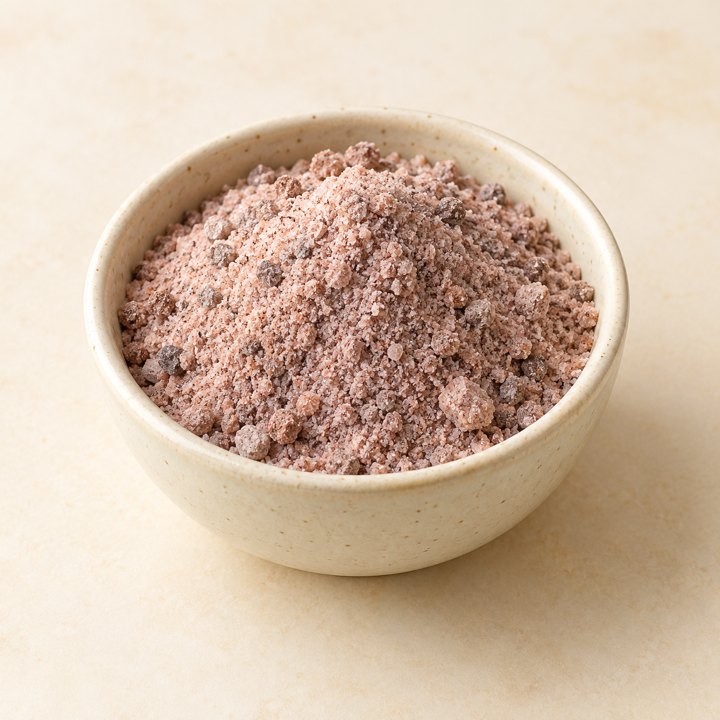
Black salt, kala namak, is a sulphurous culinary salt. A solid piece can look dark, while crushed powder is usually pinkish or mauve.
What it is and names to know
Black salt, kala namak, is a sulphurous culinary salt. A solid piece can look dark, while crushed powder is usually pinkish or mauve. It is different from activated-charcoal black salt and from ordinary pink Himalayan rock salt.
Origins, producing regions and Pakistan context
Kala namak belongs to South Asian seasoning traditions, especially savoury snacks and drinks. Traditional manufacture and household recipes vary; claims that a named person first discovered it are not well supported.
South Asian mineral-salt and processing businesses supply it to Pakistan. A Pakistani packing address does not necessarily identify where the raw salt was mined or how it was processed.
Background: WHO: sodium reduction guidance.
Types and buying advice
Look for culinary kala namak, not charcoal-coloured finishing salt. Check iodization rather than assuming mineral colour means iodine is present.
How to cook with it
Use a restrained pinch in fruit chaat, chana chaat, raita or shikanjabeen. Its characteristic egg-like aroma is useful in some vegan preparations, but too much can overwhelm a fresh fruit bowl.
Add near serving so you can judge the sulphur aroma clearly. If chaat masala already contains kala namak, taste before adding more plain salt.
Treat kala namak as a finishing flavour rather than the default salt for every stage of cooking. Its sulphurous aroma may be welcome in chaat but distracting in a delicate milk dessert. Keep a separately labelled small jar so it is not confused with pink cooking salt. In a drink, dissolve a tiny pinch completely before judging the taste; undissolved crystals can make the first sip seem mild and a later sip unexpectedly salty. For a salt-controlled meal, measure the finishing pinch and include it in the same total as every other salted seasoning.
Try the ingredient in Shikanjabeen, Chana Chaat. Follow each recipes specified form and quantity, since whole pieces and fine powder season food differently.
For related pantry ingredients, see the Pakistani ingredients and spices guide.
In a chana chaat, first combine the cooked chickpeas, chopped vegetables and other ingredients, then season a small sample with kala namak. If both chaat masala and plain salt are planned, account for all three before seasoning the whole bowl. In fruit, the sulphurous note should remain an accent rather than obscure the aroma of mango, guava or apple. Keep kala namak separate from black pepper: their similar English colour words describe unrelated ingredients. One supplies sodium and a sulphurous smell; the other supplies a peppery aroma and pungency. They cannot replace each other in a recipe.
Nutrition and realistic benefits
Sodium is an essential nutrient, but ordinary diets can readily supply more than needed. The important household question is total sodium from all foods and seasonings, not whether a salt looks natural or contains coloured mineral traces. Iodized salt supplies iodine when appropriately fortified; this is a separate property from its sodium content. Reducing excessive salt does not require making food bland: acidity, aromatics, fresh herbs and careful browning can all contribute flavour.
Disadvantages and precautions
Kala namak still contributes sodium. Trace minerals and a traditional digestive reputation do not make unlimited intake healthy or establish it as a low-sodium replacement.
Substitutions and storage
Ordinary salt supplies saltiness without the sulphurous taste. A small amount of chaat masala can work in a snack, but brings extra souring agents and spices.
Keep salt dry and covered in a food-safe container, with a clean dry spoon. Fine crystals clump when exposed to steam; a jar beside a boiling pan is inconvenient even though dry salt keeps well. Keep iodized salt protected from dampness and follow the manufacturers storage advice. Store flavoured salts according to all their ingredients, since moist fresh additions change their keeping properties. Label any decanted product so iodized salt and speciality finishing salts do not become confused.
Names and forms used in our recipes
View the recipe names covered by this guide
- black salt
- black salt (kala namak)
Frequently Asked Questions
When should I add kala namak to a drink?
Treat kala namak as a finishing flavour rather than the default salt for every stage of cooking. Its sulphurous aroma may be welcome in chaat but distracting in a delicate milk dessert.
What can I use instead of black salt?
Ordinary salt supplies saltiness without the sulphurous taste. A small amount of chaat masala can work in a snack, but brings extra souring agents and spices.
What is the main caution with black salt?
Kala namak still contributes sodium. Trace minerals and a traditional digestive reputation do not make unlimited intake healthy or establish it as a low-sodium replacement.
Keep Exploring
Related places and stories on DailyLife.pk

How we know this
- Type Explainer
- Sources 3 (3 official/academic)
- Reviewed November 2026
- Disputed points None
3 sources
Photo credits (1)
- Spice market @ Walled City @ Lahore (15449651456).jpg, Guilhem Vellut from Annecy, France, CC BY 2.0, via Wikimedia Commons
