
Ingredients & Spices · The complete guide
Moong dal
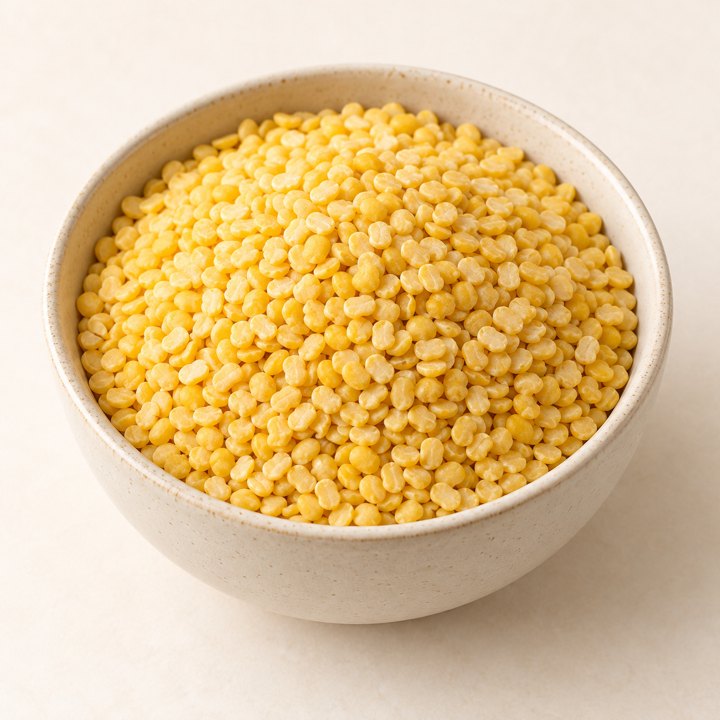
Yellow moong dal is split mung bean with the green coat removed. The pale yellow pieces cook relatively quickly and can become smooth without retaining a visible green skin.
What it is and what to buy
Yellow moong dal is split mung bean with the green coat removed. The pale yellow pieces cook relatively quickly and can become smooth without retaining a visible green skin. It is not chana dal or toor dal, despite being sold beside other yellow pulses. The fine, soft-cooking character suits khichdi and plain dal, while a soaked and ground preparation has a different role in bhallay or moong halwa.
Mung bean is Vigna radiata, a South Asian pulse sold as whole green moong, split green moong with the coat retained, or yellow moong dal with the coat removed. The yellow interior is not a different species from the green whole bean. These forms have different textures and cooking times: a seed coat helps a grain retain shape, while a split, hulled seed exposes starch that thickens the pot more quickly.
Origins and food history
Mung has a long domestication history in the Indian subcontinent. Archaeological and genetic work connects it with ancient South Asian farming rather than a single named discoverer. Exact dates differ between sites and between wild use and domesticated cultivation. Later movement through Asian trade and farming networks made it important in both South Asian dal dishes and East Asian noodles, sprouts and sweets; those uses should not be confused with one uniform culinary tradition.
Reference: Kew: Vigna radiata.
Growing regions, trade and Pakistan
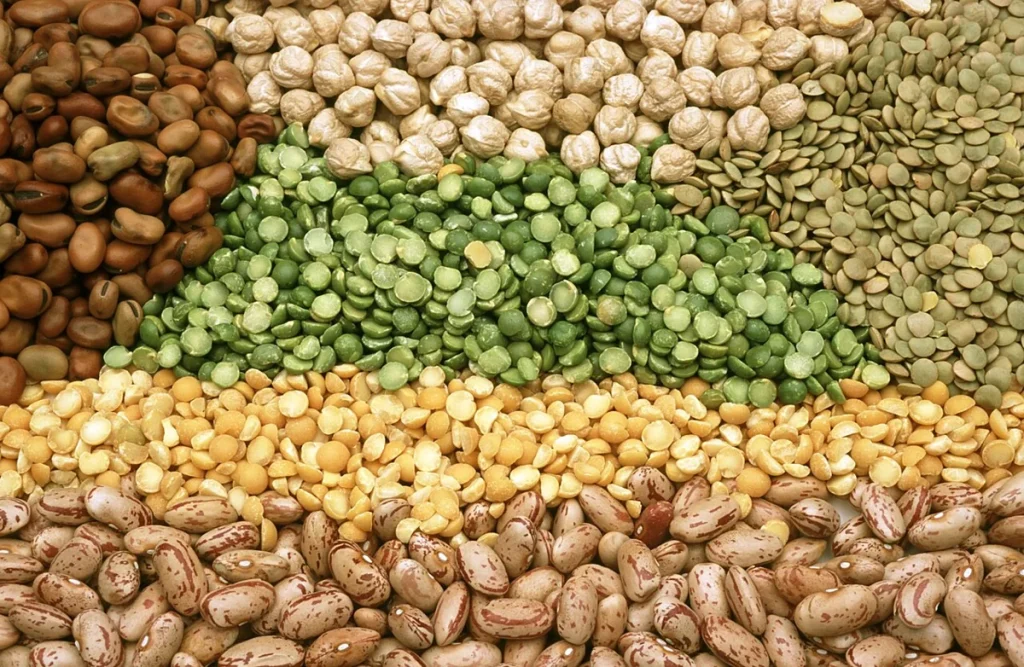
India, Pakistan, Myanmar, China and other Asian countries grow mung beans. Punjab agricultural institutions identify mung among Pakistan’s important pulse crops. Domestic production and imported grain can both reach Pakistani mills and retailers. Buyers pay attention to seed size, colour uniformity, crop age and whether the grain is whole, split or polished. A yellow packet labelled moong should not be replaced by yellow pigeon pea solely because both products look similar on a shelf.
Reference: Punjab Agriculture: pulse crops in Pakistan.
How to prepare and cook it
Rinse until loose dust is removed and simmer with enough water for the intended texture. A light dal may need no long soak, while a ground batter or halwa recipe may specify soaking to soften the pieces evenly. For khichdi, match the rice and dal so both finish tender together. For halwa, thorough grinding and patient cooking are central: a wet pulse paste does not roast like dry flour, and high heat can scorch the bottom before moisture is driven off. Stir carefully as the mixture thickens.
Put this form of the ingredient to work in Daal Chawal; Daal Anda; Dahi Bhallay. The method in each recipe determines whether it should be raw, soaked, ground, freshly cooked or chilled before it enters the dish.
Nutrition, benefits and their limits
Mung contributes plant protein, carbohydrate, fibre and minerals. Whole and skin-on forms retain more of the coat than yellow hulled dal. Cooking adds water, so a cooked bowl has a very different nutrient concentration from the same weight of dry grain. A soft texture may suit many everyday meals, but claims that moong cures illness or is automatically suitable for every digestive condition exceed what an ordinary ingredient guide can establish.
Allergies, disadvantages and safe handling
Mung is naturally free of wheat gluten, although shared milling and packing can introduce cross-contact. Legume allergy and digestive discomfort remain possible. Soaking or sprouting does not sterilise seeds. Raw sprouts have particular food-safety risks because warm, moist sprouting conditions also suit bacteria; use a reliably produced product and cook when appropriate, especially for vulnerable diners. For a standard dal, rinse and cook the actual dried seed thoroughly rather than assuming a brief rinse is sufficient preparation.
Practical substitutions
Split red masoor cooks quickly and can replace moong in some everyday dal, with a different flavour and colour. Chana dal stays firmer and needs a longer schedule. Skin-on split green moong is the same crop but adds visible flecks and a more robust texture; adjust cooking and presentation accordingly.
Keeping it fresh
Store dry mung in an airtight container in a cool, dry cupboard. Inspect for stones, insect damage and dampness before rinsing. Use older stock first and do not mix a newly purchased bag into an unlabelled container of old grain. Cool cooked dal promptly in smaller containers, refrigerate, and reheat thoroughly. Freeze portions if they will not be eaten soon. The finished dish may thicken considerably in the fridge; add a little clean water during reheating instead of using excessive heat that scorches the base.
For related ingredients and shopping terms, see the Pakistani ingredients and spices pantry guide.
Working with other forms of this ingredient
Split green moong
Split green moong is mung bean split with much of its green skin retained. Each piece shows a pale interior and green outer edge. It is distinct from both intact whole mung and yellow hulled moong dal. The retained coat adds visible texture and an earthier impression. In a grain-and-meat preparation such as hareesa, it can contribute body without disappearing as completely as the fully hulled yellow form.
Mung bean is Vigna radiata, a South Asian pulse sold as whole green moong, split green moong with the coat retained, or yellow moong dal with the coat removed. The yellow interior is not a different species from the green whole bean. These forms have different textures and cooking times: a seed coat helps a grain retain shape, while a split, hulled seed exposes starch that thickens the pot more quickly.
Inspect and rinse the split grain, then soak if the mixed-grain recipe calls for a shared soaking stage. Simmer until the pale interior is tender and the green skin has softened. When combining it with whole wheat or another slow grain, begin the slowest ingredient earlier or cook components separately before joining them. Split green moong can break down under prolonged stirring, which may be useful for hareesa but less desirable in a dal intended to retain visible pieces. Adjust liquid as the pot rests.
Put this form of the ingredient to work in Hareesa. The method in each recipe determines whether it should be raw, soaked, ground, freshly cooked or chilled before it enters the dish.
Names and forms used in our recipes
View the recipe names covered by this guide
- dry split yellow moong dal
- dry split yellow mung dal
- dry yellow split moong dal
- moong dal (split, skinned mung)
- split green moong dal
- split hulled yellow moong dal
- split skinned moong dal
- split yellow moong dal, rinsed
Frequently Asked Questions
Is yellow moong a separate crop from green mung?
No. Removing the green coat and splitting the seed exposes the yellow interior.
Does moong dal always need soaking?
Not for every boiled dal. Soaking is more important when the recipe requires grinding, a specific texture or a shorter cooking stage.
Keep Exploring
Related places and stories on DailyLife.pk

How we know this
- Type Explainer
- Sources 6 (4 official/academic)
- Reviewed November 2026
- Disputed points None
6 sources
Photo credits (1)
- CSIRO ScienceImage 3224 Pulses and legumes.jpg, division, CSIRO, CC BY 3.0, via Wikimedia Commons
