
Ingredients & Spices · The complete guide
Red bell pepper
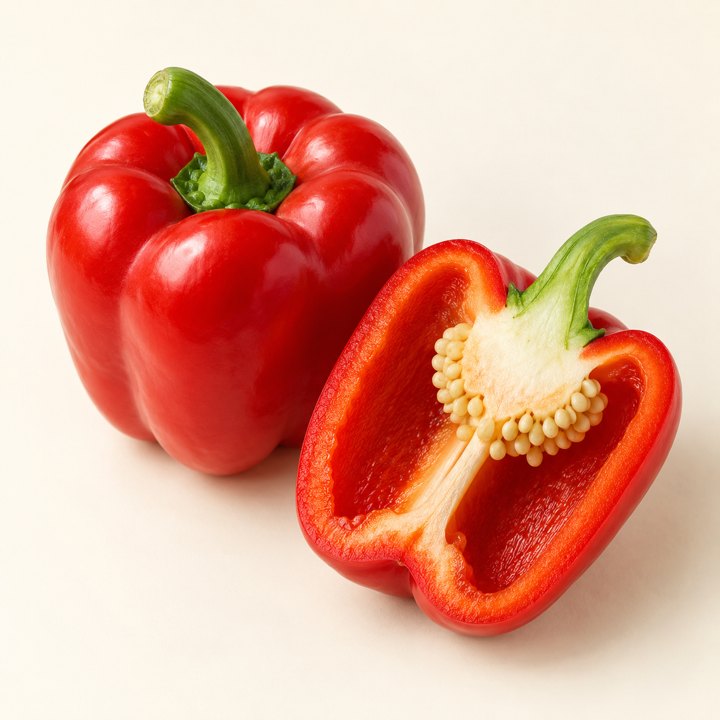
Red bell pepper is ripe sweet Capsicum annuum fruit; lal shimla mirch is a useful descriptive local name. Its eating character is sweeter and less grassy than green bell pepper, with juicy crisp walls.
What is red bell pepper? Names, flavour and types
Red bell pepper is ripe sweet Capsicum annuum fruit; lal shimla mirch is a useful descriptive local name. Its eating character is sweeter and less grassy than green bell pepper, with juicy crisp walls.
The main forms to recognise are blocky red bells, pointed sweet peppers and mini red peppers; not every red pepper is mild. Choose the form and ripeness specified by the recipe.
Origins, cultivation and the Pakistan market
Sweet peppers descend from American domesticated Capsicum crops; large non-pungent forms spread through later breeding and trade. The relevant botanical or crop background is documented in Pepper - Capsicum annuum | Kew.
Growing conditions and producing countries: Warm-season plants grown outdoors and under cover; China, Mexico, Spain and Türkiye cultivate peppers. A colourful ingredient in shashlik, jalfrezi, sauces and Pakistani Chinese dishes. Fresh, frozen and canned versions are separate market products. The best choice depends on the intended texture and whether the product is already cooked, salted or packed in liquid. Compare usable trimmed weight as well as purchase price when deciding between them.

How to prepare, cook and substitute it
Remove seed core and cut evenly. Roast and peel for a silky sauce, or stir-fry briefly for chilli-garlic prawns so the pieces retain their bright bite
Yes. Roast until the flesh softens and the skin loosens, then cool enough to handle, peel and remove the seed core. Keep any clean roasting juices if the sauce needs their flavour, but do not add so much liquid that it becomes thin. A brief stir-fry produces a different result: the skin remains and the pieces keep some bite. For a mixed shashlik skewer, cut pieces large enough to stay secure, and allow for the fact that vegetables and meat may cook at different rates.
Prepare pieces of similar thickness and decide whether the dish needs a crisp bite or a fully softened texture. In a stir-fry, water left on washed ingredients can cool the pan and dilute the sauce. In a soup or curry, a little extra moisture may instead be useful. Keep the prepared ingredient separate from raw meat until the recipe’s cooking stage, and use clean utensils for the final garnish. A small test portion can establish cooking time when the available market variety is unfamiliar or noticeably more mature than usual.
A useful starting substitute is yellow or orange sweet pepper; green pepper is firmer tasting and less sweet. Adjust the recipe for the replacement’s texture and moisture.
Buying and storing it well
Look for firm heavy fruit with glossy skin and no wet sunken spots. Buy an amount that can be used while its texture is still suitable for the intended dish. Trim away ordinary damaged portions where appropriate, but reject a product showing active decay or an abnormal smell rather than hiding it in a strongly spiced preparation.
For storage, refrigerate whole; cover and chill cut pieces; freeze strips for cooked uses. Keep prepared portions separate from unwashed produce and raw animal foods. Use a clean covered container for cut or cooked food, and label frozen portions so the oldest batch is used first. The condition at purchase, kitchen temperature and packaging all affect keeping quality; a fixed number of days is not a guarantee of safety.
Nutrition, benefits and practical cautions
The nutritional contribution is vitamin C and carotenoid pigments, with composition differing from unripe green peppers. USDA FoodData Central distinguishes raw, cooked, dried and processed forms. Recipe totals must also account for added oil, cream, sugar or syrup.
Individual pepper allergy can occur; verify a sweet variety rather than using hot red chillies. Its role in a balanced meal depends on portion size and preparation. Whole foods and concentrated supplements are different products and should not be treated as interchangeable.
Recipes using red bell pepper
Use the linked recipes to match preparation to the finished dish. Check whether the ingredient quantity means whole purchased weight, peeled edible weight, drained weight or a cooked portion before shopping. This is especially helpful when a recipe needs a thick filling or a carefully balanced drink.
For related Urdu names, pantry ingredients and cooking combinations, see the Pakistani ingredients and spices guide.
Names and forms used in our recipes
View the recipe names covered by this guide
- red bell pepper
- red pepper
Frequently Asked Questions
Can red bell pepper be roasted for a smooth sauce?
Yes. Roast until the flesh softens and the skin loosens, then cool enough to handle, peel and remove the seed core. Keep any clean roasting juices if the sauce needs their flavour, but do not add so much liquid that it becomes thin. A brief stir-fry produces a different result: the skin remains and the pieces keep some bite. For a mixed shashlik skewer, cut pieces large enough to stay secure, and allow for the fact that vegetables and meat may cook at different rates.
How should I store red bell pepper?
Refrigerate whole; cover and chill cut pieces; freeze strips for cooked uses.
What should I consider before serving red bell pepper?
Individual pepper allergy can occur; verify a sweet variety rather than using hot red chillies.
Keep Exploring
Related places and stories on DailyLife.pk

How we know this
- Type Explainer
- Sources 5 (2 official/academic)
- Reviewed November 2026
- Disputed points None
5 sources
Photo credits (1)
- I-11 Sabze Mande, Islamabad.jpg, Pakieditor, CC BY-SA 4.0, via Wikimedia Commons
