
Ingredients & Spices · The complete guide
Chana dal (Split chickpeas)
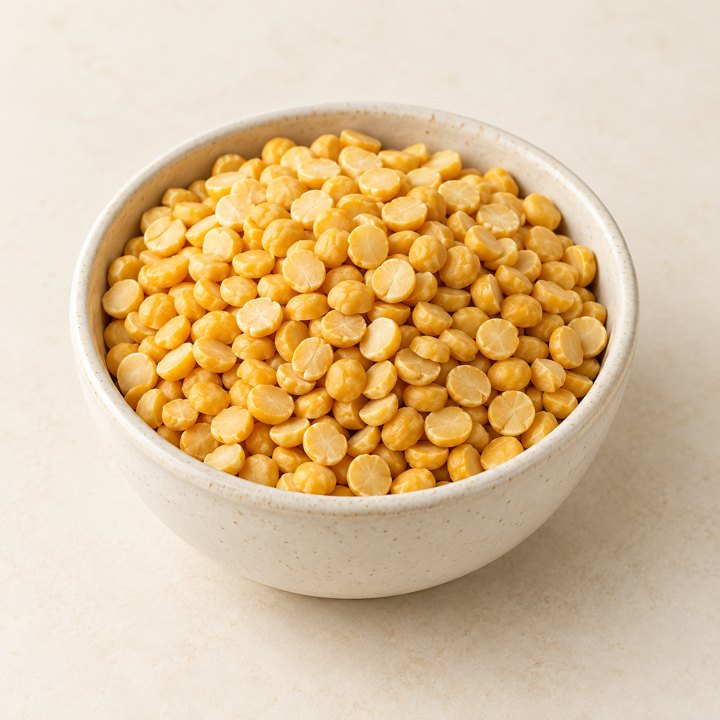
Chana dal is split, dehulled desi chickpea, often called split Bengal gram. Its yellow pieces are thicker and more angular than many other yellow dals.
What it is and what to buy
Chana dal is split, dehulled desi chickpea, often called split Bengal gram. Its yellow pieces are thicker and more angular than many other yellow dals. It is not split pea or toor dal. The loss of the skin shortens preparation, but chana dal can retain a pleasantly distinct bite when cooked carefully. That controlled firmness makes it useful both in a standalone dal and as a binder in shami kebab.
Chickpeas are seeds of Cicer arietinum, a legume, and are called chana in Pakistan. Pale, relatively large kabuli chickpeas and smaller, darker desi chickpeas are important market groups. Splitting and removing the coat produces chana dal, while milling produces gram flour. Processing changes soaking, texture and cooking behaviour; the same crop can therefore appear as a whole pulse, a flour, a cooked convenience food or a crunchy snack.
Origins and food history
Chickpea is associated with the early farming cultures of the Fertile Crescent, where archaeological evidence places it among the founder crops of agriculture. It later spread through South Asia, the Mediterranean and other regions. No individual discoverer is documented. Desi and kabuli categories describe crop types and trade traditions; they should not be used to claim that every modern packet came from the place implied by its market name.
Reference: Kew: chickpea origin.
Growing regions, trade and Pakistan
Chickpeas are grown in India, Pakistan, Australia, Türkiye, Ethiopia and Mexico, among other origins. Pakistani production includes important rainfed growing areas, while imported pulses supplement domestic supplies. Traders distinguish crop size, colour, seed calibre and processing grade. Flour, roasted gram and canned chickpeas have additional processing costs, so their retail price is not directly comparable with a kilogram of dry seed. Check the stated origin and packer rather than treating the name kabuli as proof of Afghan origin.
Reference: Punjab Agriculture: pulse crops in Pakistan.
How to prepare and cook it
Rinse and soak if the recipe calls for it, then simmer until the largest pieces are tender. For shami kebab, the dal must be soft enough to grind with meat but the mixture must also be dry enough to shape; excess cooking liquid produces fragile patties. For a dal curry, retain enough liquid for the desired gravy and stop before every piece collapses if distinct grains are wanted. Skim loose foam as useful, stir gently, and add finishing tempering after the pulse has cooked.
Put this form of the ingredient to work in Shami Kebab; Daal Chicken; Daal Gosht. The method in each recipe determines whether it should be raw, soaked, ground, freshly cooked or chilled before it enters the dish.
Nutrition, benefits and their limits
Chickpeas provide plant protein, starch, fibre, folate and minerals. Whole seed coats contribute fibre; dehulling and milling change the texture and distribution of these components. Their iron is non-haem iron, whose absorption varies with the meal; adding vitamin-C-rich vegetables or lemon is useful. They can make a filling alternative to part of the meat or refined starch in a meal, but a chickpea sweet or deep-fried snack also reflects its added sugar and fat.
Allergies, disadvantages and safe handling
Chickpea allergy is possible, including in people with other legume allergies, although an allergy to one legume does not automatically establish allergy to all. Fermentable carbohydrates can cause gas, especially after a sudden large increase in intake. Soaking, thorough cooking and starting with smaller portions may help. Neither soaking nor roasting guarantees an allergen-free food. Dry chickpeas and ordinary chickpea flour require appropriate cooking; only a product specifically sold as ready to eat should be used without further heat.
Practical substitutions
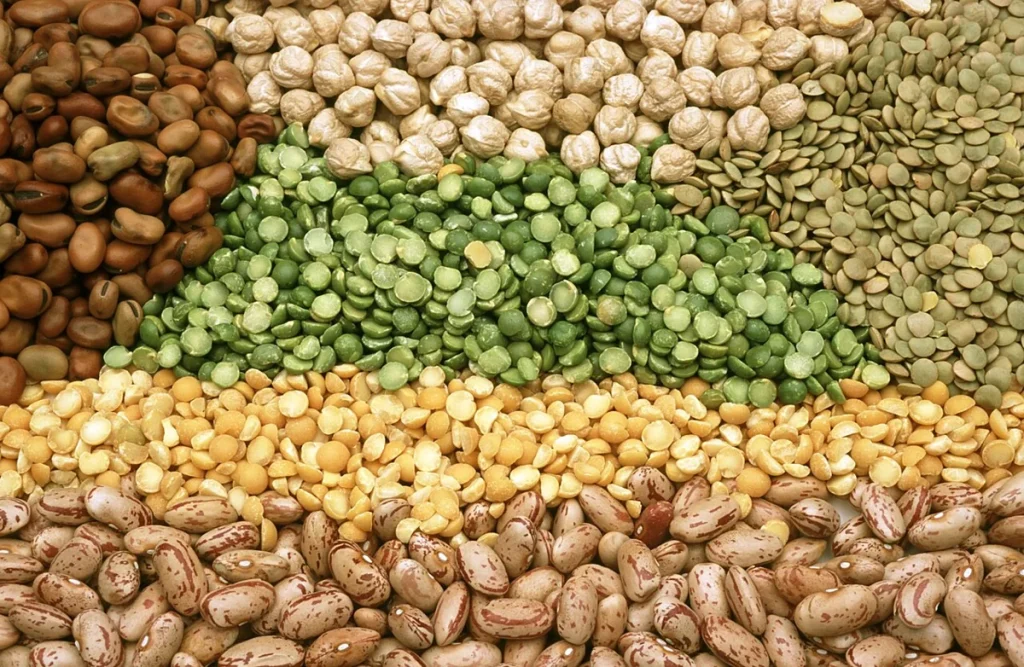
Toor dal and split yellow peas can resemble chana dal but soften and taste differently. They may work in a simple soup with adjusted timing, yet are poor untested replacements in a kebab mixture whose binding depends on moisture. Whole chickpeas must be cooked and processed differently.
Keeping it fresh
Dry chickpeas keep best in sealed, dry containers protected from insects. Very old pulses can remain hard after prolonged cooking, so stock rotation matters even when there is no obvious spoilage. Flour and roasted gram should be protected from humidity and strong smells. Refrigerate cooked chickpeas promptly in a covered container and use within a short leftover window, or freeze in meal-size portions with a little cooking liquid. Move opened canned chickpeas into a clean covered food container and follow the package storage instructions.
For related ingredients and shopping terms, see the Pakistani ingredients and spices pantry guide.
Names and forms used in our recipes
View the recipe names covered by this guide
- chana daal (split bengal gram)
- chana dal
- chana dal (split bengal gram)
- chana dal, dry
- dried split bengal gram (chana dal)
- dried split chana dal
- dry chana dal
- dry split bengal gram (chana dal)
- dry split bengal gram (chana dal), soaked and drained
- dry split chana dal
- dry split husked bengal gram (chana dal)
- split chana dal
Frequently Asked Questions
Is chana dal the same as besan?
They can come from the same chickpea crop, but chana dal is split seed and besan is flour. Their hydration and structure differ.
Why are shami kebabs falling apart?
The mixture may be too wet, the dal insufficiently softened before grinding, or the ratio incorrect. Follow the recipe’s reduction and chilling steps.
Keep Exploring
Related places and stories on DailyLife.pk

How we know this
- Type Explainer
- Sources 7 (3 official/academic)
- Reviewed November 2026
- Disputed points None
7 sources
Photo credits (1)
- CSIRO ScienceImage 3224 Pulses and legumes.jpg, division, CSIRO, CC BY 3.0, via Wikimedia Commons
