
Ingredients & Spices · The complete guide
Mozzarella
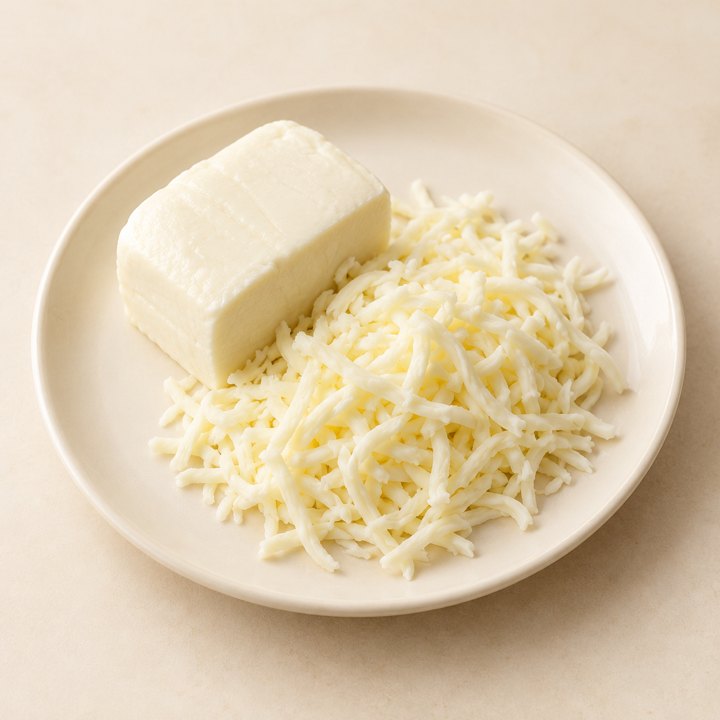
Here mozzarella means the relatively firm, low-moisture cheese commonly grated for pizza and baked fillings. It differs from fresh balls stored in liquid even though both are stretched-curd cheeses.
What it is and what to ask for
Here mozzarella means the relatively firm, low-moisture cheese commonly grated for pizza and baked fillings. It differs from fresh balls stored in liquid even though both are stretched-curd cheeses.
Check whether the product is mozzarella, a cheese blend or a formulated pizza topping. Verify milk ingredients and rennet suitability, and assess moisture rather than buying only for the longest stretch.
History, production and the Pakistan context
Mozzarella's roots lie in Italian stretched-curd making. Lower-moisture forms developed for transport, slicing and predictable pizza performance beyond the fresh cheese's short local supply chain.
Italy, the United States and many other dairy countries manufacture mozzarella; Pakistani producers also make pizza cheese. Some pizza toppings replace milk fat with vegetable fat and should be named accurately.
How to use it successfully
Grate while chilled and distribute evenly so the cheese melts before the crust overbakes. Avoid excessive topping depth, which can trap moisture and leave a greasy, underbaked centre.
A pizza cheese must balance moisture, stretch, melt and flavour. More stretch does not necessarily mean better quality for every dish: a lasagna filling may benefit from moisture that a thin pizza base cannot tolerate. A cheese blend can be practical, but note its actual ingredients so repeated batches behave consistently.
Nutrition, benefits and limits
Mozzarella provides protein and calcium, but salt and saturated fat depend on the formulation. A long cheese pull is a cooking feature rather than a nutrition claim.
Choosing a replacement
Fresh mozzarella gives more moisture and a different melt. A cheddar blend adds flavour but changes stretch and oil release; paneer will not melt into an elastic layer.
When changing a dairy product, compare moisture, fat, acidity, sweetness and whether it must melt, whip or hold its shape. Preserve the recipe’s functional balance rather than only the spoonful count. A substitute should also meet the household’s actual dietary requirement; similar texture does not establish identical allergen suitability.
Safe handling and storage
Keep the cheese wrapped and refrigerated as directed, limiting exposure to air and strong refrigerator odours. Grate with clean equipment and return the unused block promptly. An opened block, a grated bag and individually wrapped slices can have different keeping guidance, so use the instructions for the actual product rather than a universal cheese rule.
Cold cheese generally grates more neatly, while thinly cut or grated pieces melt faster than a large lump. Match the cheese to the intended function: flavour, stretch, thickening or a cohesive slice. Overheating can cause natural cheese to release oil or clump, while processed slices may melt differently because they include emulsifying salts.
Check the milk source, enzymes, added starches or fats and halal suitability as relevant. A reduced lactose level does not remove milk allergens. Cheese is concentrated food, so salt and saturated fat can accumulate through repeated small additions to bread, fillings and sauces. Freezing may make a block crumbly; if allowed by the producer, a frozen portion is often better suited to grating into cooked food than to neat table slices.
Planning, portions and serving
For lasagna, the sauce and cheese both contribute moisture, so assess the entire layered dish rather than blaming every wet result on the cheese. For naan, a moderate filling is easier to seal than an oversized mound. Fine shreds melt quickly, while thick pieces can need more time. Record the brand or formulation when a product performs well, especially if comparing true mozzarella with a blend or a vegetable-fat topping.
Recipes and pantry links
Use mozzarella according to the form specified in the linked recipe: raw versus cooked, bone-in versus boneless, sweetened versus plain, and the stated cut or processing style all affect the result. The ingredient discussion above explains which differences matter most here. Read the complete recipe before shopping, then measure the prepared usable quantity rather than assuming every package has the same yield.
For related ingredient names, local terminology and flavour pairings, browse the Pakistani ingredients and spices pantry guide.
Working with other forms of this ingredient
Mozzarella sticks
This entry means firm mozzarella cut into sticks for a stuffed pizza crust, not an already breaded fried appetiser. The basic ingredient is low-moisture mozzarella in a convenient shape.
Buy firm unbreaded cheese for a recipe requesting sticks in the crust. Check that a prepared product is dairy mozzarella rather than a vegetable-fat pizza topping.
Cut sticks of even thickness and seal dough completely around them. Leave room for melting cheese to expand; exposed ends or a thin dough seam allow leakage during baking.
Sealing the dough matters as much as choosing cheese. Pinch the seam securely, avoid stretching the dough paper-thin over a sharp cheese edge and follow the recipe's resting instructions. Pre-breaded snack sticks add a coating that belongs to a different preparation and may prevent the stuffed crust from closing or baking as intended.
Names and forms used in our recipes
View the recipe names covered by this guide
- firm mozzarella sticks
- low-moisture mozzarella
- mozzarella
Frequently Asked Questions
Why does some pizza cheese stretch differently?
Moisture, fat, acidity, processing and any blend ingredients affect performance. The longest stretch is not a universal quality measure; choose a product suited to the crust and dish.
What should I check before buying mozzarella for these recipes?
Check whether the product is mozzarella, a cheese blend or a formulated pizza topping. Verify milk ingredients and rennet suitability, and assess moisture rather than buying only for the longest stretch. Match the stated plain or flavoured form and read the storage directions before opening the pack.
What is a practical substitute for mozzarella?
Fresh mozzarella gives more moisture and a different melt. A cheddar blend adds flavour but changes stretch and oil release; paneer will not melt into an elastic layer. Make a small test where binding, melting or a delicate final texture is central, and adjust the recipe rather than treating different ingredients as identical.
Keep Exploring
Related places and stories on DailyLife.pk

How we know this
- Type Explainer
- Sources 9 (3 official/academic)
- Reviewed November 2026
- Disputed points None
9 sources
- FAO: dairy product types and characteristics
- FAO: milk processing
- FAO: traditional milk products in developing countries
- FAO: milk and dairy products in human nutrition
- OECD–FAO: dairy production and trade context
- FDA: raw milk questions and answers
- NIDDK: lactose intolerance definition and facts
- FDA: food allergies
- European Union: Mozzarella Tradizionale specification
Photo credits (1)
- Milk glass.jpg, Stefan Kühn, CC BY-SA 3.0, via Wikimedia Commons
