
Ingredients & Spices · The complete guide
Kulfi
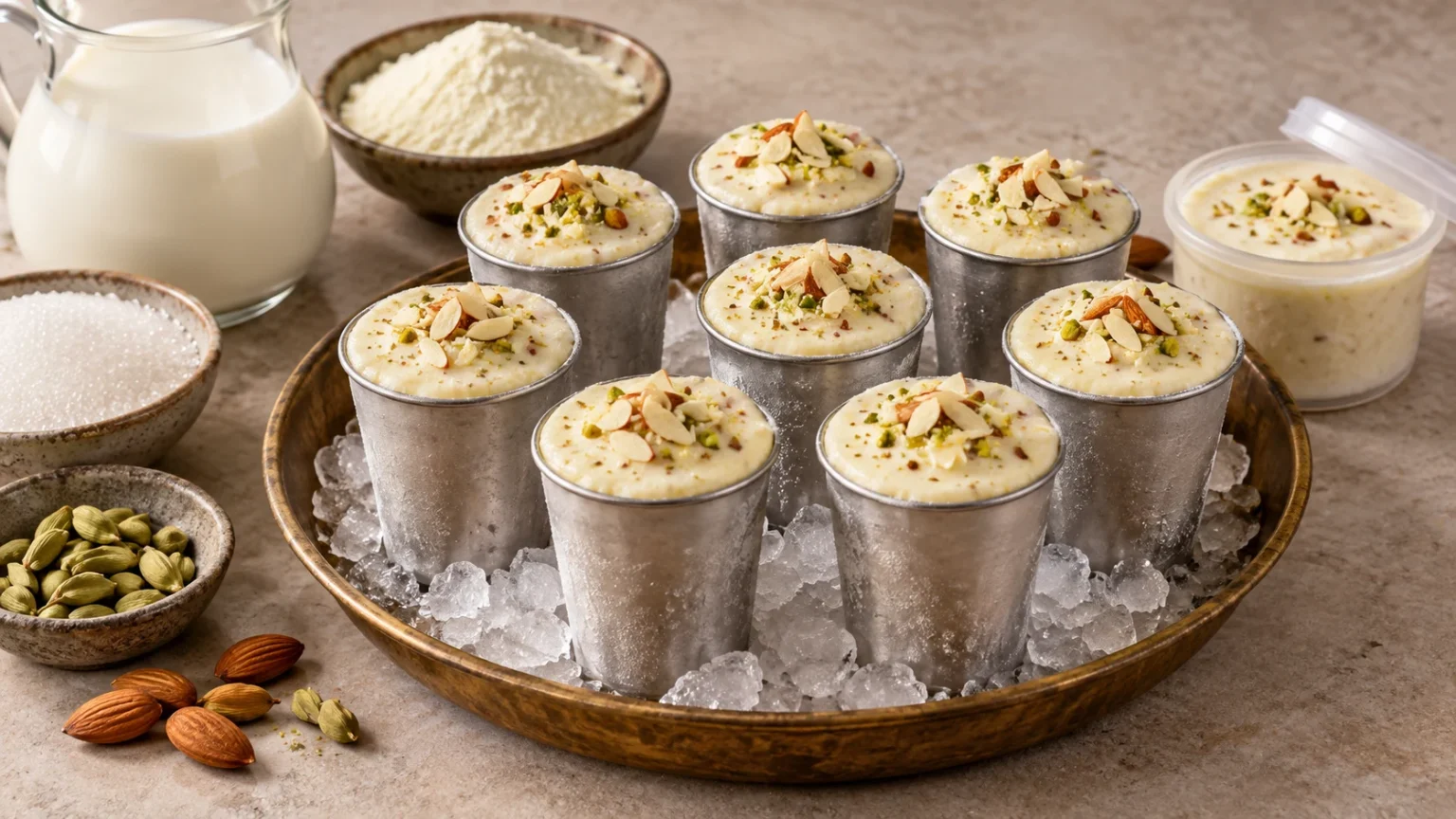
Kulfi is a dense frozen milk dessert, traditionally made by concentrating sweetened milk and freezing it in moulds. Plain kulfi is specified here as an ingredient for falooda.
What it is and local names
Kulfi is a dense frozen milk dessert, traditionally made by concentrating sweetened milk and freezing it in moulds. Plain kulfi is specified here as an ingredient for falooda. In Pakistan it is often served on a stick, in a mould or as sliced kulfa.
Origins and documented history
Kulfi belongs to the subcontinent’s milk-sweet and ice-cooling traditions, often associated with the Mughal period. The FAO documents it as a traditional frozen milk product. Those associations do not establish a single identifiable inventor of every modern kulfi formula.
Types and manufacture
Traditional preparation reduces milk before adding sugar and flavourings, then freezes it without the same aeration as many commercial ice creams. Modern versions may use milk powder, condensed milk, starch or stabilizers. Nut and fruit versions are distinct from plain kulfi.
Reference: FAO: The technology of traditional milk products in developing countries; Tamil Nadu Agricultural University: Milk value-added products.
Production, trade and Pakistan
Pakistan and India both make kulfi through households, shops and factories. Frozen finished products require a cold chain, so local manufacture and storage conditions matter. Imported ingredients in a local kulfi do not change the need for clear finished-product information.
Reference: Trade Development Authority of Pakistan: Lahore cuisine.
How to use it
For falooda, add a cold portion near serving so it remains partly frozen among vermicelli, milk and syrup. Plain kulfi keeps the flavour balance simpler than a strongly flavoured nut version. A fully melted portion turns the dish into a different liquid mixture.
Nutrition, benefits and limits
Milk supplies protein and calcium, but kulfi also contains concentrated milk solids, sugar and often substantial fat. A dense un-aerated portion can contain more food by weight than the same-looking scoop of a lighter frozen dessert.
Drawbacks, allergens and precautions
Milk allergy and lactose are relevant; nuts are common even in shops selling a plain variety. Keep continuously frozen. A misshapen refrozen bar may signal temperature abuse, although appearance alone cannot establish safety.
Substitutions and storage
Plain dairy ice cream is a convenient substitute but gives a lighter, more aerated texture. A verified dairy-free frozen dessert changes nutrition and allergens. Frozen sweetened rabri is closer in flavour but is not automatically the same formula.
Store covered in the freezer at the pack’s recommended temperature. Protect from repeated thawing and refreezing and from freezer odours. Portion promptly and return the remainder immediately.
Buying and portioning milk sweets
Buy prepared milk sweets from a supplier that keeps them protected and at the temperature specified for the product. An attractive garnish cannot show whether milk was pasteurized or whether a cold chain was maintained. Ask about the production date, ingredients and storage directions, particularly for loose sweets without a label. Divide the quantity needed for the recipe with a clean utensil, then return the remainder promptly to the refrigerator or freezer as appropriate. A small sweet distributed through a dessert often gives sufficient flavour without making every serving excessively rich.
Combining with other dessert ingredients
Chill the components separately before assembling a cold dessert. Warm syrup or warm custard can melt a frozen component, loosen a whipped topping or encourage a fragile milk sweet to break apart. Add soft pieces late and fold gently instead of stirring vigorously. If the sweet arrives in syrup, drain only as the recipe requires: including all the packing syrup changes both the sweetness and the liquid balance. For a layered dish, test one serving first so that you can see whether the pieces sink, bleed colour or become too soft after standing.
Food safety and nutrition
Concentrating milk concentrates its solids, and adding sugar, cream or frying fat increases the energy density further. These foods can provide milk protein and calcium, but they are still dessert ingredients rather than treatments for weakness or nutritional deficiencies. Milk is a major allergen, and lactose remains unless the formula specifically removes it. Nuts, wheat and other ingredients may also be present. Perishable foods should be refrigerated promptly; the familiar two-hour room-temperature limit becomes one hour in conditions above 32°C. Smell alone cannot establish that a mishandled sweet is safe.
Planning ahead without compromising quality
Prepare the accompanying syrup, nuts or dry garnishes separately whenever practical. Label a chilled or frozen portion with the preparation date and keep it covered to prevent drying and odour absorption. Follow a commercial pack’s instructions after opening rather than borrowing the unopened shelf life. A homemade version has no automatically validated storage period merely because it resembles a packaged one. If serving outside in hot weather, put out small portions and replenish from a cold reserve. Do not combine a new cold batch with leftovers that have already stood warm.
Recipes and the Pakistani pantry
Use this ingredient in Falooda. Explore related ingredients in the Pakistani ingredients and spices pantry.
Names and forms used in our recipes
View the recipe names covered by this guide
- prepared plain kulfi
Frequently Asked Questions
What should I check when buying kulfi?
Choose plain kulfi with a known dairy and nut ingredient list and an intact frozen cold chain. Refrozen-looking stock deserves caution.
What can replace kulfi in a recipe?
Plain dairy ice cream is a convenient substitute but gives a lighter, more aerated texture. A verified dairy-free frozen dessert changes nutrition and allergens.
How should kulfi be stored?
Store covered in the freezer at the pack’s recommended temperature. Protect from repeated thawing and refreezing and from freezer odours.
Keep Exploring
Related places and stories on DailyLife.pk

How we know this
- Type Explainer
- Sources 5 (3 official/academic)
- Reviewed November 2026
- Disputed points None
