
Travel destination
Kallar Kahar and the Salt Range: Babur's Lake and Ancient Hills
A lake where the first Mughal emperor laid out a garden, peacocks in the orchards, and a ridge of red rock packed with temples, forts and fossils beside the M-2 motorway.
- Chakwal and Jhelum districts, Punjab
- Lake about 1,500 ft (c. 460 m) above sea level
- Best season October to March
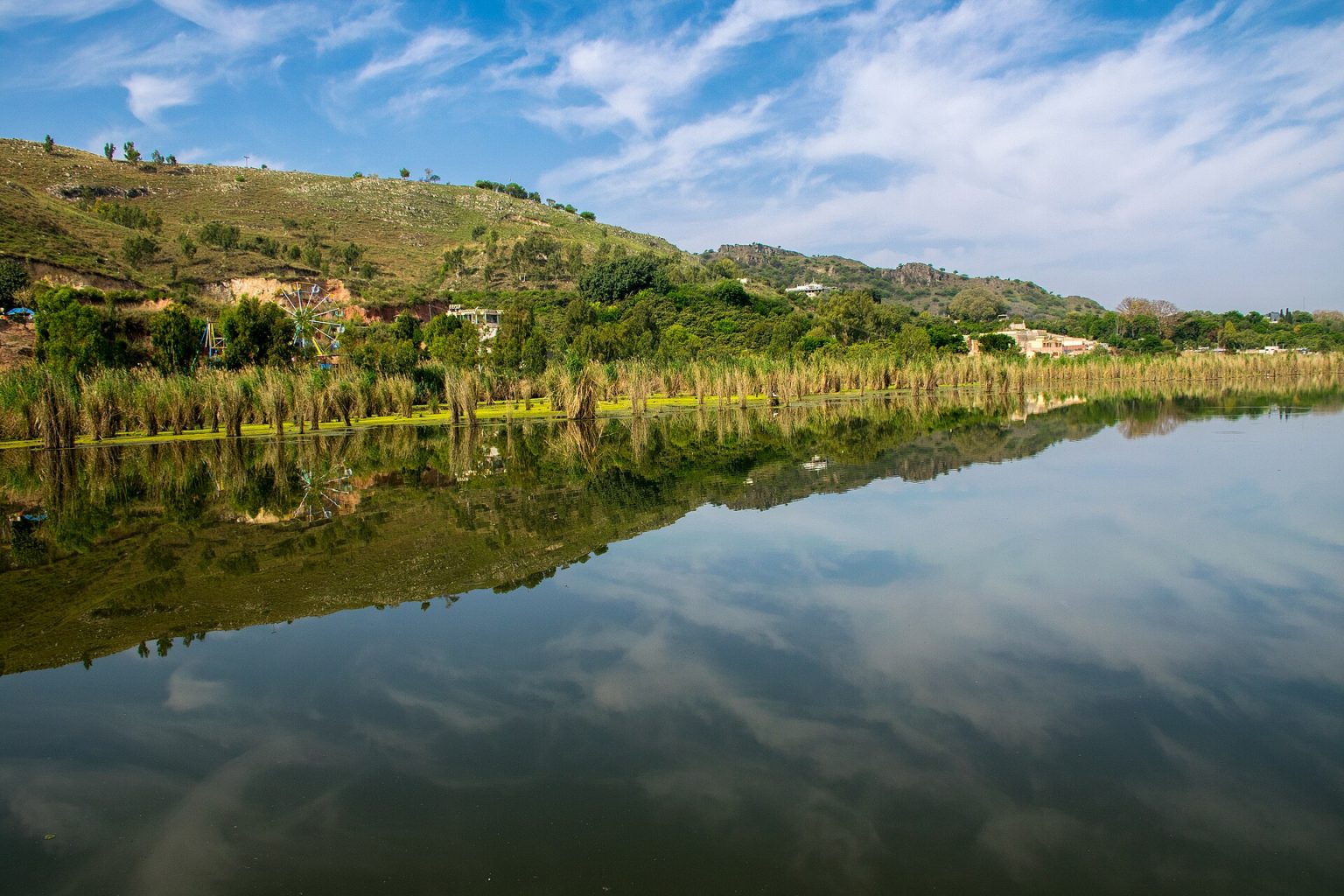
Kallar Kahar Lake, Chakwal District, Punjab
About Kallar Kahar and the Salt Range
Between the Jhelum and the Indus, the plains of Punjab are broken by a long escarpment of red, grey and white rock: the Salt Range. UNESCO's tentative-list entry calls it an open book of geology, with strata from the Precambrian onwards exposed in its cliffs, the world's thickest seams of rock salt beneath, and fossils ranging from marine creatures to early apes. Its ridges are also strewn with human history: Hindu temples, Buddhist remains, hilltop forts and the places where Mughal emperors camped.
The easiest way into this landscape is Kallar Kahar, a small town about 25 km south-west of Chakwal, right beside the Islamabad–Lahore M-2 motorway. Its broad saltwater lake, about 1,500 feet above sea level and only a few feet deep, has drawn travellers for centuries. The Mughal founder Babur reached it in February 1519 on his way into Hindustan, praised its good air and had a garden, the Bagh-e-Safa, laid out on the shore. A rough rock platform above the orchard is still called Takht-e-Babri, Babur's throne, where tradition says he addressed his troops.
Today Kallar Kahar is a popular stop for families on the motorway, known for its peacocks, loquat and fruit orchards and lakeside boating. Writers in Dawn and elsewhere have noted the pressures on the lake from sewage and litter, so expect a busy, lived-in place rather than a pristine one. Use it as a base: within an hour or so lie the temples of Katas Raj, the Khewra salt mine, the red sandstone fort of Malot and the hilltop ruins of Nandana.
Kallar Kahar is the doorway; the real reward is the hidden valleys and ruined forts of the Salt Range behind it.
Highlights of the Salt Range
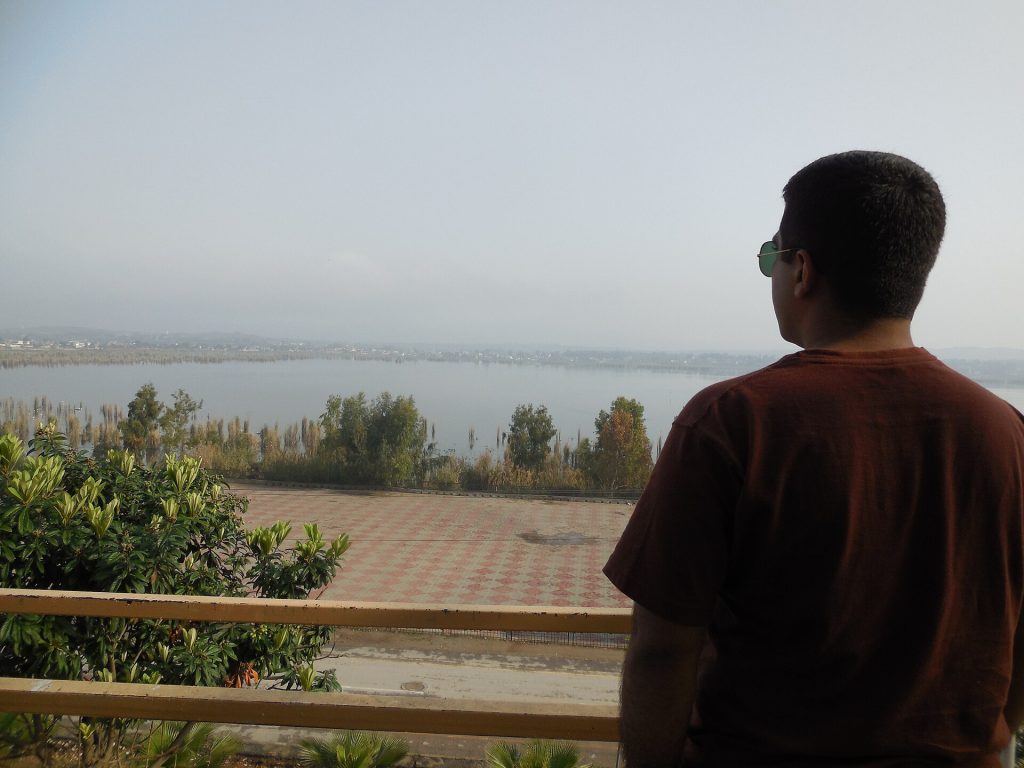
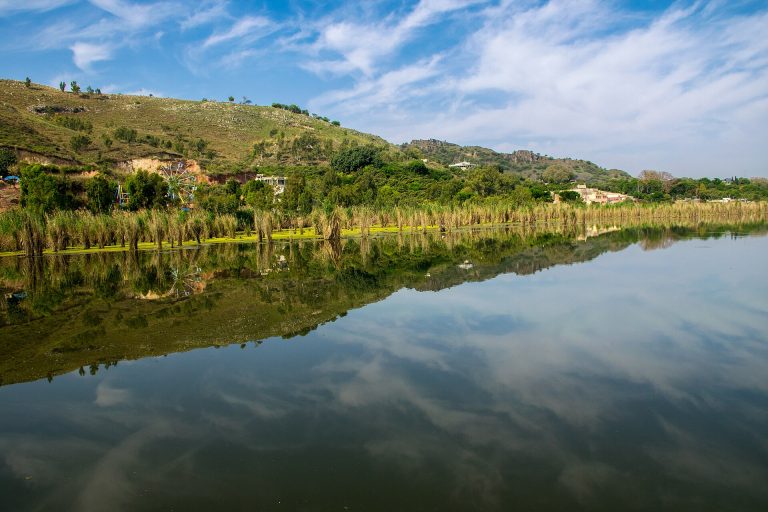 Kallar Kahar LakeA shallow saltwater lake with boating, a lakeside promenade and views back to the hills. Visit early to avoid crowds.
 Katas Raj TemplesA sacred pond ringed by Hindu temples near Choa Saidan Shah, about 40 km from Chakwal, Pakistan's most important Hindu pilgrimage site.
 Khewra Salt MineTunnels and chambers of pink rock salt in a working mine, with a salt mosque and a small train.
 Tilla JogianThe 'hill of the jogis', an ancient ascetic centre at the eastern end of the range near Jhelum.
Plan Your Trip
Best Time to Visit
October to March
Cool, clear weather suits walking and fort visits. Spring brings loquats and green slopes; summers are hot, and the monsoon can make tracks slippery.
How to Reach
M-2 motorway
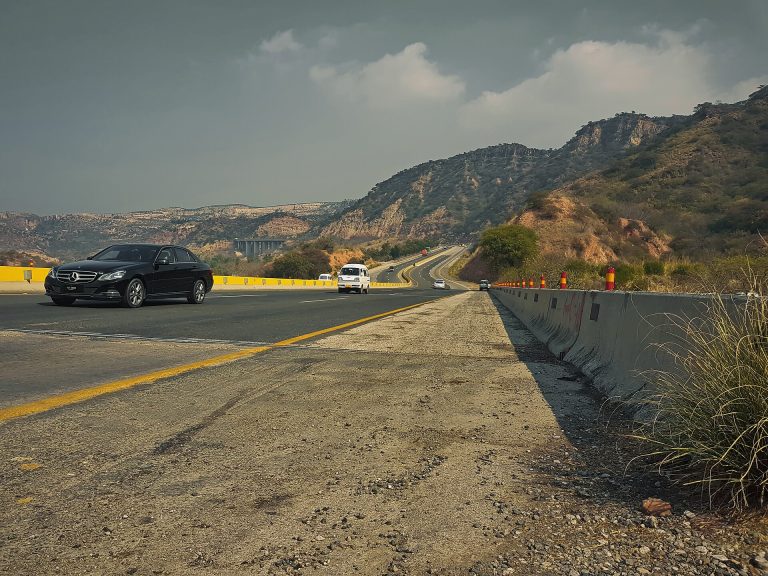
Kallar Kahar has its own interchange on the Islamabad–Lahore M-2. It is an easy morning's drive from either city; Chakwal is about 25 km away by road.
Where to Stay
Lakeside hotels or Chakwal
Hotels and guesthouses line the lake road at Kallar Kahar, with more options in Chakwal and Jhelum. Book ahead for Eid holidays.
Food
Motorway dhabas and karahi
Roadside restaurants serve karahi, daal and tandoori bread; local fruit stalls sell loquats and guavas in season.
Culture
Family destination
Weekends and holidays are busy with families. Dress modestly, especially at shrines and temples.
Practicalities
Remote sites
Forts such as Malot and Nandana involve rough tracks and climbs; go with a local guide, carry water and start early.
Suggested Visit Plan
- 1
Check fees and openings
Katas Raj and Khewra charge entry and keep set hours; check the latest with TDCP, the Chakwal district administration and the PMDC (for Khewra) before you go.
- 2
Morning at Kallar Kahar
Leave the M-2 at Kallar Kahar, walk the lake shore, climb to Takht-e-Babri and look for peacocks in the orchards.
- 3
Midday at Katas Raj
Drive towards Choa Saidan Shah to visit the temples and sacred pond.
- 4
Afternoon at Khewra
Continue to the Khewra Salt Mine for the train ride and salt chambers.
- 5
Add a second day
Stay overnight and hike to Malot or Nandana, or head east to Tilla Jogian and Rohtas Fort near Jhelum.
Visit Responsibly
- Keep litter out of the lake and take plastic away with you.
- Do not feed or chase the peacocks.
- Do not pick fruit from orchards; they are auctioned to local contractors.
- Do not remove fossils, salt crystals or stones from cliffs and ruins.
- Respect active places of worship at Katas Raj and local shrines.

Kallar Kahar and the Salt Range Through Time
Every dated moment our guides record about Kallar Kahar and the Salt Range, from its own history and from national events that touched it. Each entry links to its source page.
- c. 10th century
Malot
The fort-temple complex at Malot is built in red sandstone on the Salt Range.
- 1014
Nandana falls
Mahmud of Ghazni captures Nandana, the Shahi stronghold in the Salt Range.
- 1519
Babur at Kallar Kahar
Babur camps by the lake on his campaigns into India and lays out the Bagh-e-Safa garden.
- 22 March 1996
Three Indus and Salt Range sites
Taunsa Barrage, Chashma Barrage and the Uchhali Complex joined the list.
- 2016
Landscapes and forts
Eight entries, including Derawar and the desert forts of Cholistan, Deosai National Park and the Salt Range and Khewra Salt Mine.
Do you remember Kallar Kahar and the Salt Range as it used to be? Share a memory or an old photo, our editors review every story before it appears.
Frequently Asked Questions
Is Kallar Kahar Lake salty?
Yes. The district administration describes it as a saltwater lake about 1,500 feet above sea level, only four or five feet deep at most.
What is Takht-e-Babri?
A rock platform beside the site of Bagh-e-Safa, the garden that the Mughal emperor Babur had laid out after reaching the lake in February 1519. Tradition says he addressed his army from it.
How do I get to Kallar Kahar?
Take the M-2 motorway between Islamabad and Lahore and leave at the Kallar Kahar interchange. Chakwal is about 25 km away.
What else can I see in the Salt Range?
Katas Raj Temples, Khewra Salt Mine, Malot and Nandana forts, Tilla Jogian and, a little further east, Rohtas Fort.
Is the Salt Range a UNESCO site?
The Salt Range and Khewra Salt Mine were added to Pakistan's UNESCO Tentative List in 2016 as a mixed natural and cultural property; they are not inscribed.
Keep Exploring
Related places and stories on DailyLife.pk
Katas Raj TemplesVisit the Katas Raj Temples in Chakwal: the sacred pond, Satgarha temples, Hari Singh Nalwa's haveliKhewra Salt MineVisit Khewra Salt Mine, Jhelum District: history, the mine train, salt mosque and brine poolsTilla JogianTilla Jogian near Jhelum: the ancient jogi monastery, temples, Guru Nanak and Heer Ranjha links Rohtas FortExplore Rohtas Fort near Jhelum: Sohail Gate, ramparts, Haveli Man Singh, Shahi Masjid and stepwellsChakwalChakwal city guide: Kallar Kahar lake and Takht-e-Babri, Katas Raj Temples, Malot Fort, Salt Range lakesJhelumJhelum city guide: Rohtas Fort, Tilla Jogian, Khewra and Mangla nearby, the river and cantonment
How we know this
- Type Travel guide
- Sources 6 (4 official/academic)
- Reviewed October 2026
- Disputed points None
Rules and fees change, confirm with the official links below before you act.
6 sources
- Important Places, District Chakwal, Government of the Punjab
- Kallar Kahar: blessed by nature, neglected by rulers, Dawn
- The Salt Range and Khewra Salt Mine – Tentative List, UNESCO World Heritage Centre
- Tourist Attraction – Khewra Salt Mines, Pakistan Mineral Development Corporation
- Salt Range, Encyclopaedia Britannica
- Tilla Jogian risks being lost forever without urgent help, Dawn
Photo credits (7)
- The Reflecting Beauty - Kallar Kahar Lake.jpg, Muhammad Salman Shahid, CC BY-SA 4.0, via Wikimedia Commons
- Kallar Kahar lake view.jpg, Azizalykhan, CC BY-SA 4.0, via Wikimedia Commons
- Motorway M2, Salt Range, Pakistan 04.jpg, Shahzaib Damn Cruze, CC BY-SA 4.0, via Wikimedia Commons
- Katas Raj Temple 2.jpg, Dowdoo14, CC BY-SA 4.0, via Wikimedia Commons
- Khewra Salt Mines 03.jpg, Shahzaib Damn Cruze, CC BY-SA 4.0, via Wikimedia Commons
- Tilla Jogian hills at sunset, River Jhelum in the foreground.jpg, Xishan01, CC BY-SA 3.0, via Wikimedia Commons
- Rohtas Fort (Jhelum, Pakistan) - World Heritage Site.jpeg, Hussain Khalid, CC BY-SA 4.0, via Wikimedia Commons
