
Travel destination
Derawar Fort: Forty Bastions in the Cholistan Desert
A colossal square fort of fired brick rising out of the sands of Cholistan, with forty round bastions, a white marble mosque and the tombs of the Nawabs of Bahawalpur at its feet.
- Cholistan, Bahawalpur District, Punjab
- 40 bastions, walls up to 30 m high
- Best season November to February
Derawar Fort, Cholistan Desert, Bahawalpur District
About Derawar Fort
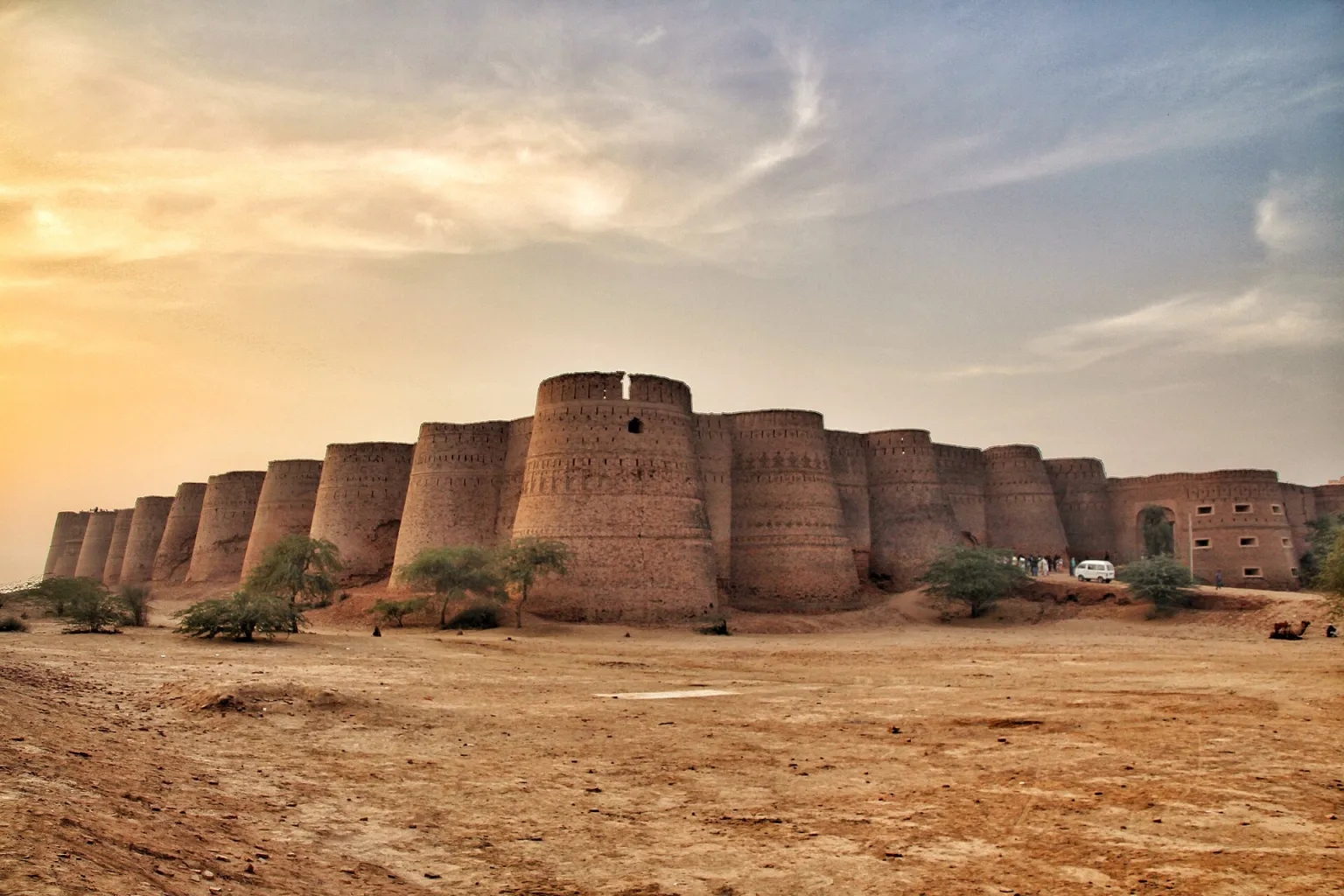
Driving south across the flat sands of Cholistan, you see Derawar long before you reach it: a wall of buff brick lined with massive round bastions, standing alone on the horizon. It is the largest and best preserved of a chain of desert forts that once guarded wells and caravan routes across the western edge of the Thar, and in 2016 Pakistan placed it at the head of a group nomination, 'Derawar and the Desert Forts of Cholistan', on its UNESCO Tentative List.
According to that listing, a first fort here is attributed to Rai Jajja Bhatti, a 9th-century Rajput ruler, and the site was rebuilt and enlarged by local clans between the 16th and 18th centuries. In 1733 it was taken by Nawab Sadeq Mohammad Khan I of Bahawalpur; the Nawabs lost it in 1747, regained it in 1804 and used it as a desert residence well into the 20th century. The fort remains linked to the former ruling family, and access to the interior has varied over the years.
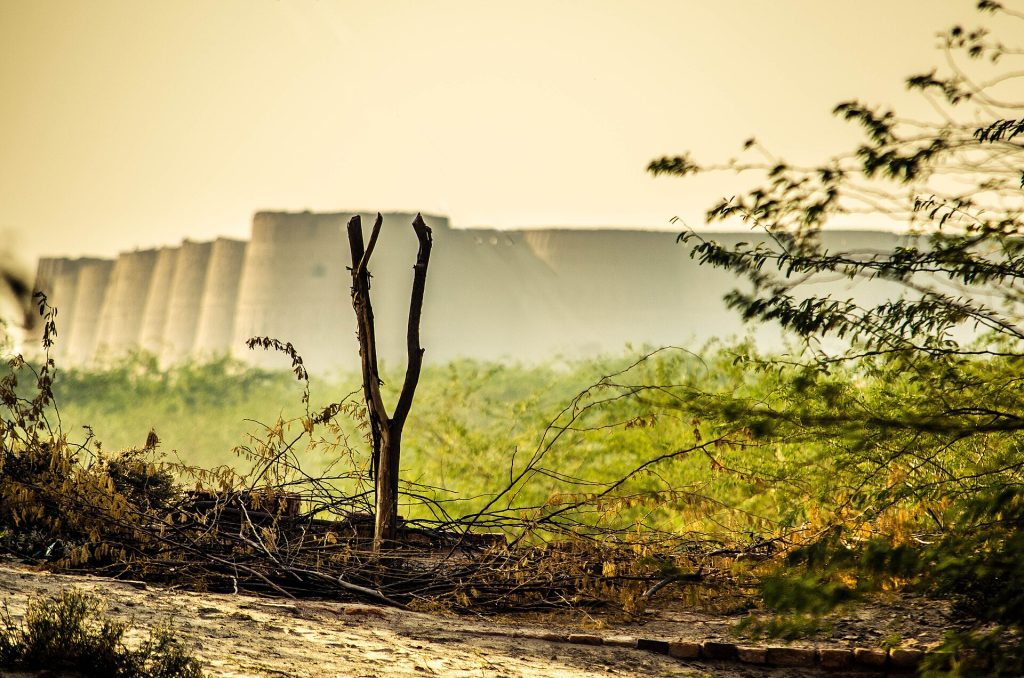
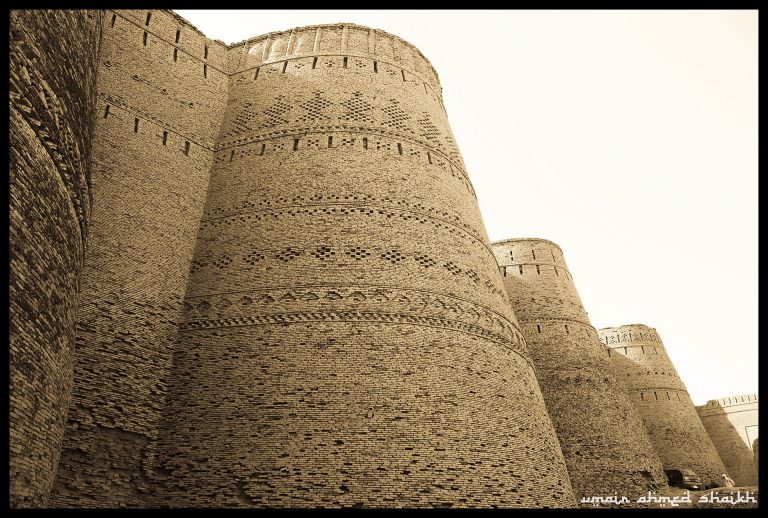
The scale is the thing. UNESCO describes a square of clay brick whose walls run to about 1,500 metres and rise as high as 30 metres, punctuated by forty circular bastions, ten to a side, decorated with cut-brick patterns. Below the walls stand a white marble mosque modelled on Mughal forms and the domed tombs of the Nawabs, while the sands around are dotted with the settlements and rainwater ponds of Cholistan's camel and cattle herders. Each February the fort becomes the base of the Cholistan Desert Rally organised by the Tourism Development Corporation of Punjab.
Arrive for sunset: the bastions glow red, the dunes turn violet, and the desert falls almost completely silent.
Highlights
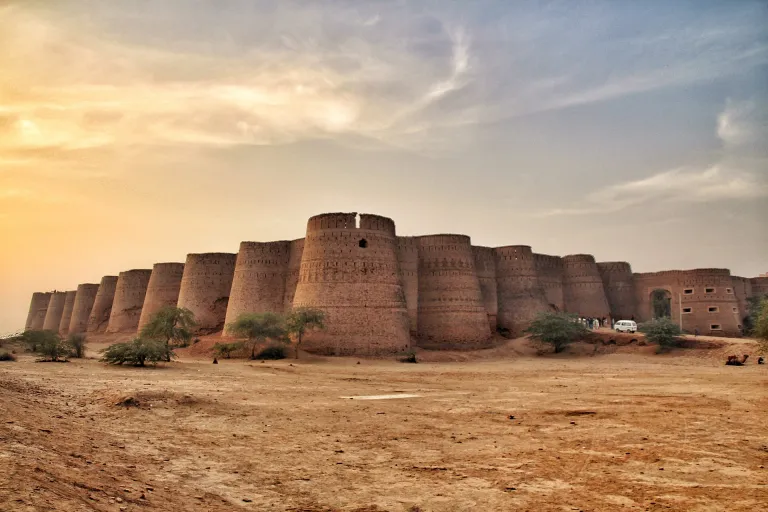 The bastioned wallsWalk around the outside of the fort to appreciate the forty bastions and their cut-brick decoration; the full circuit is a long but rewarding walk.
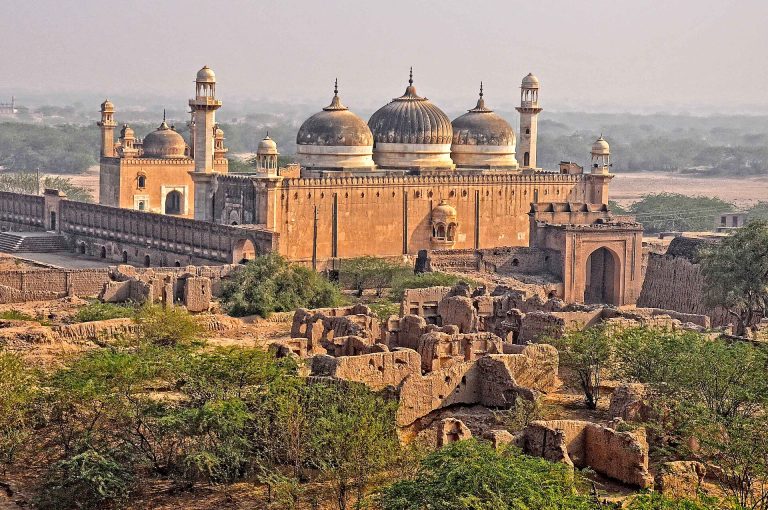 Abbasi MosqueA white marble mosque below the walls, listed by UNESCO as the Moti (Pearl) Mosque. Visit outside prayer times and dress modestly.
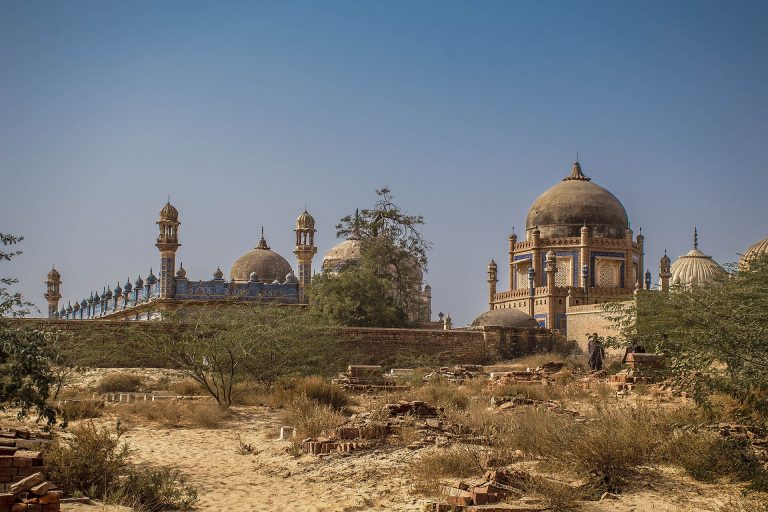 Royal graveyardThe ornate cemetery of the Nawabs of Bahawalpur, with domed tombs and tilework, a short walk from the fort.
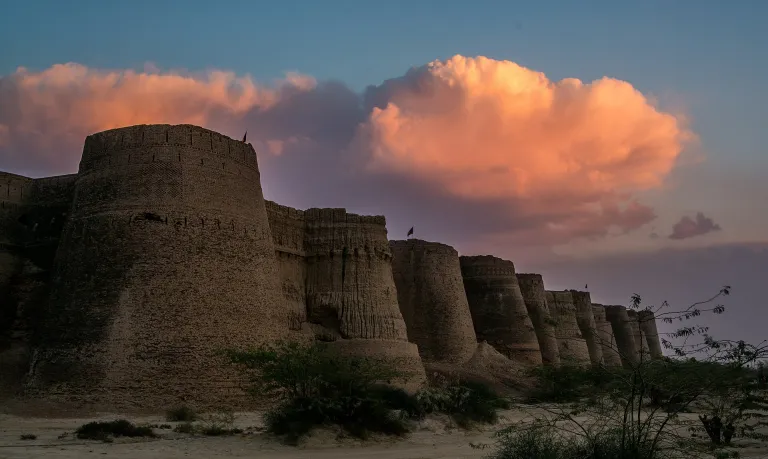 Dunes and tobasThe surrounding sands, dotted with herders' huts and rainwater ponds, are best explored with a local driver.
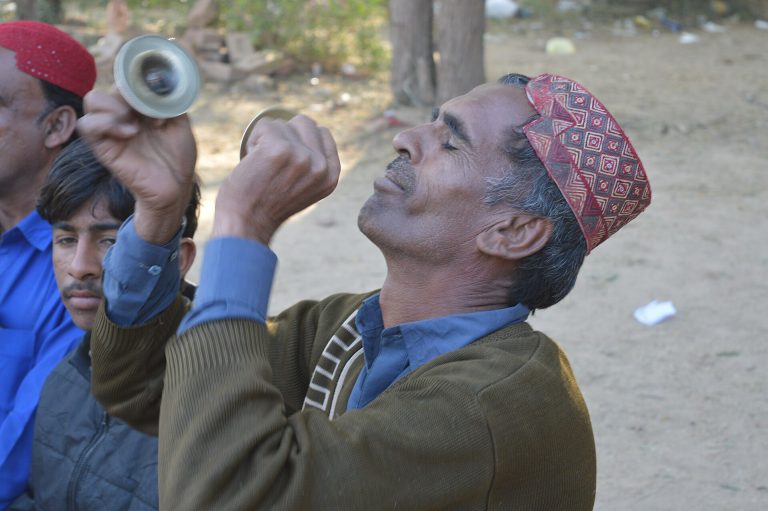 Cholistan Desert RallyTDCP's winter rally sends cars, bikes and trucks across the desert from a base near Derawar, with camps and cultural events.
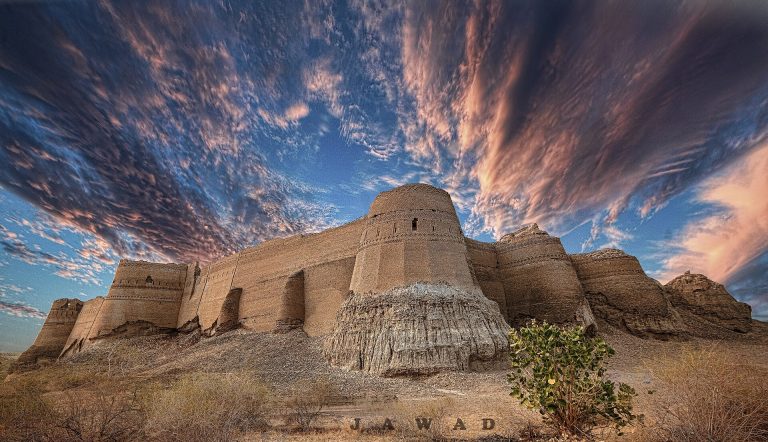 Other desert fortsWith a 4x4 and guide, ruined forts such as Islamgarh and Dingarh and the shrine of Channan Pir can be added to a longer trip.
Plan Your Trip
Best Time to Visit
November to February
Winter days are mild and nights cold. From April to September Cholistan is extremely hot; avoid midday travel.
How to Reach
About 95 km south of Bahawalpur
Drive from Bahawalpur via Ahmadpur East or Yazman; the road to the fort is passable by car, but the desert beyond it needs a 4x4. Allow most of a day for a return trip with time on site.
Where to Stay
Bahawalpur or desert camps
Most visitors stay in Bahawalpur. During the rally and peak winter, seasonal tented camps operate near the fort; book through established operators.
Food & Water
Carry supplies
Services at Derawar are minimal. Bring water and snacks; eat in Bahawalpur or Ahmadpur East.
Culture
Linked to the former rulers
The fort is associated with the family of the former Nawabs; respect gates and signs and ask locally about any access to the interior.
Safety
Desert travel
Mobile coverage is patchy. Travel in daylight, tell someone your plans and never drive into the dunes without an experienced local driver.
Suggested Visit Plan
- 1
Check dates and access
For rally dates, camps and Punjab tourism services, check the Cholistan Desert Rally and TDCP websites. Interior access to the fort is not guaranteed; confirm locally before you set out.
- 2
Afternoon departure from Bahawalpur
Leave Bahawalpur after lunch to reach Derawar in the late afternoon.
- 3
Walls, mosque and graveyard
Walk the outer walls, visit the mosque and the royal graveyard, and find a spot on the dunes for sunset.
- 4
Night in a camp or return
Stay in a seasonal desert camp for the stars, or drive back to Bahawalpur after dark with a local driver.
- 5
Optional desert day
With a 4x4, spend the next morning visiting herders' settlements, Channan Pir or the ruins of Islamgarh before returning.
Visit Responsibly
- Do not climb the walls or remove bricks; the structure is fragile.
- Keep vehicles to established tracks; dune driving destroys desert vegetation.
- Never pollute tobas, which are drinking water for people and livestock.
- Pack out all rubbish, especially plastic.
- Ask before photographing herding families and offer something in return, such as buying local crafts.
Frequently Asked Questions
Who built Derawar Fort?
The UNESCO tentative listing attributes the first fort to Rai Jajja Bhatti in the 9th century. The present structure reflects rebuilding between the 16th and 18th centuries; the Nawabs of Bahawalpur took it in 1733.
Can I go inside Derawar Fort?
Access to the interior has varied over the years because the fort is linked to the former ruling family. The walls, mosque and graveyard can be seen from outside; ask locally about any access.
How far is Derawar Fort from Bahawalpur?
About 95 km south of the city by road. The road is passable by car, but a 4x4 is needed to explore the desert beyond.
When is the Cholistan Desert Rally?
It is usually held in February and based near Derawar. Check the official TDCP rally website for the next dates.
Is Derawar a UNESCO World Heritage Site?
Not yet. 'Derawar and the Desert Forts of Cholistan' was added to Pakistan's UNESCO Tentative List in 2016.
Keep Exploring
Related places and stories on DailyLife.pk
 Cholistan DesertCholistan Desert guide: Derawar Fort and the desert forts, the Cholistan Desert Rally, Channan Pir
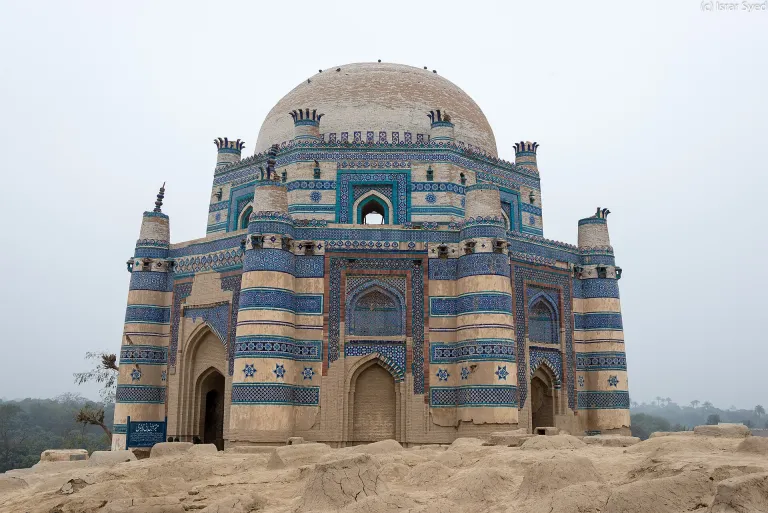 Uch SharifVisit Uch Sharif in Bahawalpur District: Bibi Jawindi's tomb, the Bukhari shrines, Sufi history
 BahawalpurBahawalpur city guide: Noor Mahal, Darbar Mahal, Central Library, Lal Suhanra National Park, Derawar Fort
 Ahmadpur EastAhmadpur East guide: Sadiq Garh Palace, Uch Sharif's shrines, Derawar Fort and Cholistan
 HasilpurHasilpur city guide: Bahawalpur District farming town on the Sutlej, nearby Noor Mahal, Derawar and Cholistan
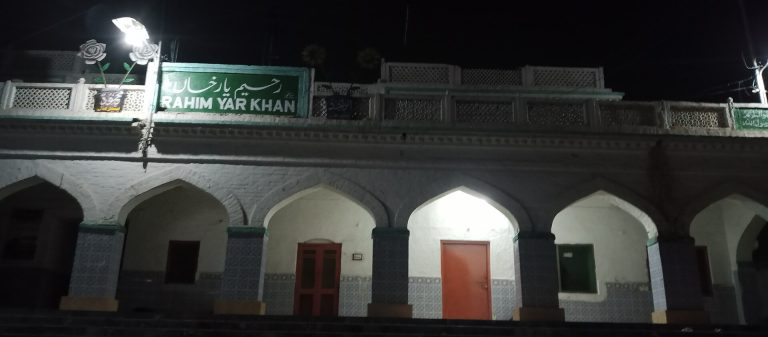 Rahim Yar KhanRahim Yar Khan city guide: Bhong Mosque, Pattan Minara, Cholistan forts, mangoes, Bahawalpur State history, airport
How we know this
- Type Travel guide
- Sources 6 (3 official/academic)
- Reviewed October 2026
- Disputed points None
Rules and fees change, confirm with the official links below before you act.
6 sources
- Derawar and the Desert Forts of Cholistan – Tentative List, UNESCO World Heritage Centre
- Cholistan Desert Rally – official website, Tourism Development Corporation of Punjab
- Bahawalpur, Encyclopaedia Britannica
- District Bahawalpur, Government of the Punjab
- Channan Pir, Dawn
- Full case study: Cholistan (September 2018), Global Water Partnership
Photo credits (10)
- Derawar Fort, Bahawalpur I.jpg, Fassifarooq, CC BY-SA 4.0, via Wikimedia Commons
- The Mighty Derawar Fort.jpg, Kofmjn, CC BY-SA 4.0, via Wikimedia Commons
- Abbasi mosque - View from Derawar Fort.jpg, Naveedulfatkhan, CC BY-SA 3.0, via Wikimedia Commons
- Abbasi Graveyard, Cholistan, Bahawalpur.jpg, Umar Jamshaid, CC BY-SA 4.0, via Wikimedia Commons
- Beautiful cloud formation during Sunset over Derawar Fort.jpg, Muhammad Ashar, CC BY-SA 3.0, via Wikimedia Commons
- Musicians of Cholistan desert performing in Derawar Fort.jpg, Rao Ahmad, CC BY-SA 4.0, via Wikimedia Commons
- Islam Garh Fort Cholistan.jpg, jawad, CC BY-SA 4.0, via Wikimedia Commons
- Cholistan camels.jpg, Hamza Bin Asim, CC BY-SA 4.0, via Wikimedia Commons
- Tomb of Bibi Jawindi Uch Sharif.jpg, Israr Syed, CC BY-SA 4.0, via Wikimedia Commons
- View of Noor Mahal Bahawalpur.jpg, Asif Nawaz, CC BY-SA 3.0, via Wikimedia Commons
