Chicken Sajji
چکن سجی
Oven-roasted whole chicken; Balochi-inspired
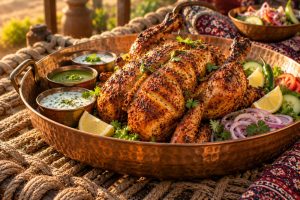
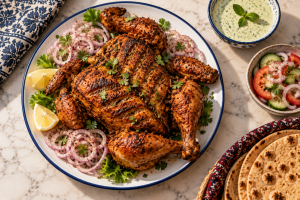
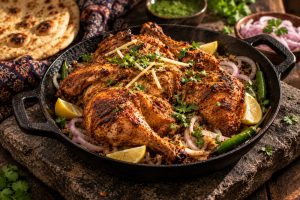
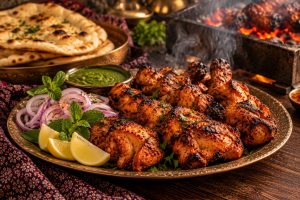
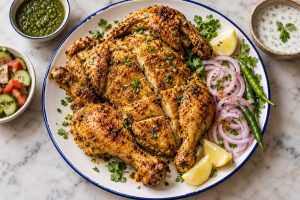
Balochi-inspired whole roast chicken, simply seasoned with salt, lemon and black pepper and roasted gently before a hotter finish. Traditional sajji is often cooked beside coals on a spit; this is an oven adaptation, not a traditional outdoor spit demonstration.

Total includes 2 hours refrigerated seasoning and a 15-minute rest. Roast times are estimates for the original bird size; use the actual bird weight and temperature checks. One tablespoon = 15 ml; one teaspoon = 5 ml.
About Chicken Sajji
Balochi-inspired whole roast chicken, simply seasoned with salt, lemon and black pepper and roasted gently before a hotter finish. Traditional sajji is often cooked beside coals on a spit; this is an oven adaptation, not a traditional outdoor spit demonstration.
Personally cooked and tested by Zohair Fakhar for DailyLife.pk. Cooking times can vary with your stove, cookware and batch size; follow the texture and doneness cues in the method.
Make it work for your kitchen
Original quantities serve 4. Cooking times, pan size and frying-oil depth do not scale, cook in extra batches instead.
Before you start
Before you start
Sanitize work surfaces and prepare a clean roasting/steaming area. Measure marinade ingredients; use a thermometer at three parts of the bird.
Set up the equipment
Have the following tools ready before starting: Digital kitchen scale and spoons; Poultry-safe food thermometer; Large oven-safe tray with rack / steamer as relevant; Food-safe marinating container; Clean carving board and sturdy tongs.
Clean workspaceMeasure the ingredients
Measure the ingredient quantities for your selected servings before applying heat. Keep separately listed groups, such as dough, filling, sauce or garnish, in separate containers; keep any optional additions separate.
Use the ingredient list aboveCheck allergens and substitutions
Check ingredient labels and any substitutions against these notes: No major allergens intentionally added; check spice packaging
Before cooking
Step-by-step cooking method
1 Prepare without rinsing
Remove giblets from whole raw chicken, giblets removed, pat dry and check the body cavity is empty. Keep the chicken chilled and prevent drips on vegetables.
2 Season lightly
Rub fine salt, fresh lemon juice and freshly ground black pepper over and inside the bird.
3 Season lightly (continued)
Omit optional ginger-garlic paste for the most restrained seasoning; otherwise use as a restaurant-style variation.
4 Refrigerate to season
Cover and refrigerate for 2 hours. Avoid prolonged room-temperature holding.
5 Set the roasting pan
Preheat oven to 170°C conventional. Place chicken breast up on a rack; add water for roasting tray beneath the rack, keeping the skin clear of water. Truss loosely only if needed.
6 Roast gently
Roast 65–85 minutes as an initial estimate; begin probing before the end. Do not rely on colour or juices. At the thickest breast and innermost thigh and wing, aim for at least 74°C.
7 Brown without drying
Brush with neutral oil and raise heat to approximately 220°C for 8–15 minutes if further colour is desired. Stop once browned; keep checking temperature in all the thickest areas.
8 Rest and carve
Rest 15 minutes loosely tented, carve safely and serve with simple rice or bread (not included).
Chef’s tips
- Keep seasoning restrained to let the roasted chicken stand out. The oven method approximates rather than replicates traditional spit or coal cooking.
- Dry the chicken surface before hot oil or the browning stage.
- Check the thick breast and inner thigh and wing with a thermometer; time alone cannot establish safety.
Common mistakes & quick fixes
- Outer surface darkens before the centre cooks
- Cover or reduce heat; continue cooking until every thick part is 74°C.
- Chicken dries out
- Use a rack and monitor early; shorten the browning finish after safe doneness.
- Marinade seems watery
- Pat poultry dry and avoid adding unnecessary liquid to the rub.
Variations & serving ideas
Variation: Chilli can be adjusted without changing the cooking safety temperature.
Variation: Serve with naan, raita, salad or rice (not included in ingredient or nutrition totals).
Variation: Use an oven-safe approach rather than large-volume deep frying if equipment is unsuitable.
Perfect result check
| Check | 74°C internal minimum at thickest breast, innermost thigh and wing, away from bone. |
|---|---|
| Check | Even exterior colour without charred bitter spices. |
| Check | Meat easy to carve, with no raw-looking inner thick sections. |
Storage & reheating
| Cool and refrigerate | Within 2 hours | Refrigerate cooked portions in shallow containers within 2 hours, or 1 hour if ambient temperature exceeds 32°C; keep at or below 4°C. |
|---|---|---|
| Store and reheat | 3–4 days | Use within 3–4 days refrigerated or freeze promptly. Reheat thoroughly to 74°C; quality may decline with reheating. |
Know when to change the heat
| Stage | Heat | What to look for |
|---|---|---|
| Prepare without rinsing | No heat | Check the cavity is empty and keep raw-chicken drips off other ingredients. Pat the surface dry without rinsing the bird. |
| Season lightly | No heat | Spread the measured seasoning over the skin and inside the cavity. Keep the seasoning even rather than leaving concentrated salty patches. |
| Refrigerate to season | No heat | Keep the seasoned chicken covered in the fridge throughout the 2-hour seasoning period. |
| Set the roasting pan | Medium oven | The oven should be fully preheated and the bird raised above the tray liquid. Leave space around it for hot air to circulate. |
| Roast gently | 170°C conventional | Probe the thickest breast and innermost thigh and wing without touching bone. Every checked area must reach at least 74°C (165°F); allow longer if any part is below this. |
| Brown without drying | High oven | Use the hotter oven only for the colour needed. Watch the skin closely and stop before the seasoning blackens or the meat dries. |
| Rest and carve | No heat | Move the cooked bird to a clean board and rest loosely tented for 15 minutes before carving. Keep raw-chicken utensils away. |
Helpful answers before you cook
How can I brown the skin without drying out the chicken?
Pat the skin dry before seasoning and keep the bird raised above the tray liquid. After gentle roasting, use the hotter finish only if more colour is needed. Watch closely and stop once browned; continue checking the thick breast, innermost thigh and wing rather than roasting longer for colour alone.
How do I know a whole chicken is cooked?
Use a clean calibrated food thermometer. Check thickest breast, innermost thigh and wing; all must reach at least 74°C.
Can I use a larger chicken?
Use the actual raw bird weight to scale the seasoning. A larger bird, or two birds for more people, needs adequate tray space and its own temperature checks. The serving selector does not make roast time proportional: check the thickest breast, innermost thigh and wing of each bird reaches at least 74°C (165°F).