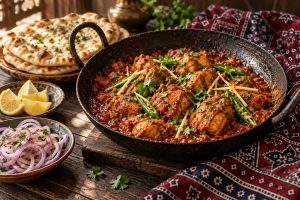
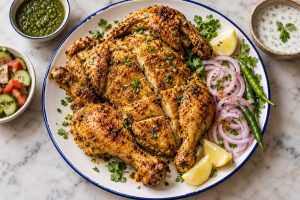
Chicken Chargha
چکن چرغہ
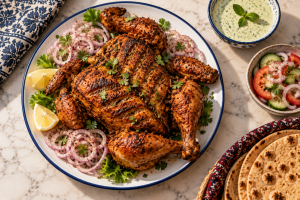
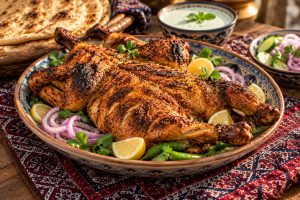
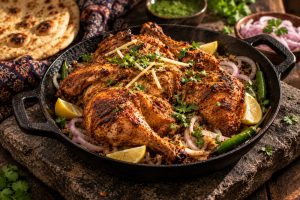
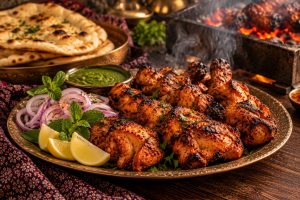
Whole chicken with a yogurt-spice coating and a bronzed oven finish
Pakistani-style whole chicken rubbed with spiced yogurt, roasted covered and finished uncovered until browned. This oven-friendly chargha is a proposed home preparation, distinct from the steamed-and-fried Lahori version.

Excludes 240 min marinating, 10 min resting. One tablespoon = 15 ml; one teaspoon = 5 ml.
About Chicken Chargha
Pakistani-style whole chicken rubbed with spiced yogurt, roasted covered and finished uncovered until browned. This oven-friendly chargha is a proposed home preparation, distinct from the steamed-and-fried Lahori version.
Personally cooked and tested by Zohair Fakhar for DailyLife.pk. Cooking times can vary with your stove, cookware and batch size; follow the texture and doneness cues in the method.
Make it work for your kitchen
Original quantities serve 4. Cooking times, pan size and frying-oil depth do not scale, cook in extra batches instead.
Before you start
Before you start
Sanitize work surfaces and prepare a clean roasting/steaming area. Measure marinade ingredients; use a thermometer at three parts of the bird.
Set up the equipment
Have the following tools ready before starting: Digital kitchen scale and spoons; Poultry-safe food thermometer; Large oven-safe tray with rack / steamer as relevant; Food-safe marinating container; Clean carving board and sturdy tongs.
Clean workspaceMeasure the ingredients
Measure the ingredient quantities for your selected servings before applying heat. Keep separately listed groups, such as dough, filling, sauce or garnish, in separate containers; keep any optional additions separate.
Use the ingredient list aboveCheck allergens and substitutions
Check ingredient labels and any substitutions against these notes: Contains milk
Before cooking
Step-by-step cooking method
1 Prepare the whole chicken
Remove the giblets from whole raw chicken, giblets removed, pat dry with disposable towels and cut 3–4 shallow slits in the thick breast and thigh flesh; keep separate from ready-to-eat foods.
2 Blend the spiced coating
Combine plain unsweetened yogurt, ginger-garlic paste, lemon juice, half the neutral oil, fine salt, Kashmiri chilli powder, ground cumin, ground coriander, ground turmeric, garam masala and ground black pepper into a thick paste.
3 Marinate under refrigeration
Coat all sides and the slits thoroughly. Cover and chill at or below 4°C for 4 hours; never marinate on the counter.
4 Prepare the covered roasting pan
Preheat oven to 180°C conventional (160°C fan as an initial trial). Place the bird on a rack over water beneath roasting rack in a deep oven-safe tray, breast up; tent tightly with foil without touching the heating element.
5 Roast until approaching doneness
Roast covered for approximately 55–70 minutes for a 1.3 kg bird; check temperatures before removing foil. This is a planning estimate, not a substitute for the thermometer.
6 Uncover and brown
Remove foil carefully away from the face.
7 Uncover and brown (continued)
Brush with the remaining neutral oil, raise oven to about 210°C and roast for approximately 12–20 minutes until bronzed. Check 74°C in the thick breast and innermost thigh and wing areas, without touching bone.
8 Rest and carve
Once every checked section is at least 74°C, rest loosely covered for 10 minutes, then carve with clean utensils.
Chef’s tips
- Covered roasting protects a whole bird while the uncovered finish builds colour; thermometer readings, not the clock, decide doneness.
- Dry the chicken surface before hot oil or the browning stage.
- Check the thick breast and inner thigh and wing with a thermometer; time alone cannot establish safety.
Common mistakes & quick fixes
- Outer surface darkens before the centre cooks
- Cover or reduce heat; continue cooking until every thick part is 74°C.
- Chicken dries out
- Use a rack and monitor early; shorten the browning finish after safe doneness.
- Marinade seems watery
- Pat poultry dry and avoid adding unnecessary liquid to the rub.
Variations & serving ideas
Variation: Chilli can be adjusted without changing the cooking safety temperature.
Variation: Serve with naan, raita, salad or rice (not included in ingredient or nutrition totals).
Variation: Use an oven-safe approach rather than large-volume deep frying if equipment is unsuitable.
Perfect result check
| Check | 74°C internal minimum at thickest breast, innermost thigh and wing, away from bone. |
|---|---|
| Check | Even exterior colour without charred bitter spices. |
| Check | Meat easy to carve, with no raw-looking inner thick sections. |
Storage & reheating
| Cool and refrigerate | Refrigerate cooked portions in shallow containers within 2 hours, or 1 hour if ambient temperature exceeds 32°C; keep at or below 4°C. | |
|---|---|---|
| Store and reheat | 3–4 days | Use promptly chilled, refrigerated portions within 3–4 days, or freeze promptly in sealed containers. Thaw in the fridge and reheat the portion needed to 74°C (165°F) throughout. Add a little liquid and cover during reheating if the meat begins to dry. |
Know when to change the heat
| Stage | Heat | What to look for |
|---|---|---|
| Prepare the whole chicken | No heat | Remove giblets and pat the chicken dry on a poultry-only preparation surface. Keep raw juices away from ready-to-eat foods and clean utensils. |
| Blend the spiced coating | No heat | The yogurt, spices and oil should form a thick, evenly mixed coating that stays on the bird rather than running straight off. |
| Marinate under refrigeration | No heat | Keep the coated chicken covered at 4°C or below during the four-hour marinating stage. |
| Prepare the covered roasting pan | 180°C conventional oven | Use an oven-safe rack and deep tray, with the rack above the water. Secure the foil cover and keep it clear of the heating element. |
| Roast until approaching doneness | 180°C conventional | The covered stage should cook the thick flesh while protecting the coating from early scorching. Begin thermometer checks before relying on the stated time. |
| Uncover and brown | About 210°C conventional oven | Uncover away from your face and watch the coating as it browns. Avoid blackening the spices, and confirm 74°C in the thick breast, innermost thigh and wing. |
| Rest and carve | No heat | Rest only after all checked areas have reached 74°C. Use a clean board and carving utensils, separate from those used for raw chicken. |
Helpful answers before you cook
Is this chargha deep-fried or oven-roasted?
Our version is oven-roasted: it cooks covered first, then uncovered at a higher temperature to brown the coating. It does not use a deep-frying stage. Keep the rack above the tray water and use an oven-safe pan with room for the bird and a secure foil cover.
How do I know a whole chicken is cooked?
Check the thickest breast and the innermost thigh and wing with a clean food thermometer, keeping the tip away from bone. Each checked area should reach at least 74°C (165°F). If one area is below that temperature, continue roasting and check again; surface colour and clear juices do not replace the temperature checks.
Can I use a larger chicken?
A larger bird needs more space and may take longer for its thick centres to cook. Scale the coating to the bird’s weight, use a suitable roasting pan and check the breast, thigh and wing with a thermometer. Do not multiply cooking time directly by weight or by the serving selector. For more servings, several similar-size birds are easier to portion consistently than one much larger bird.