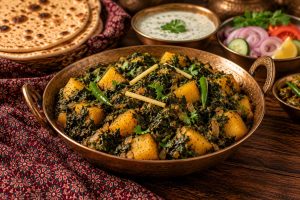
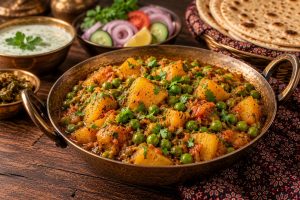
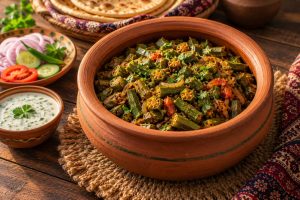
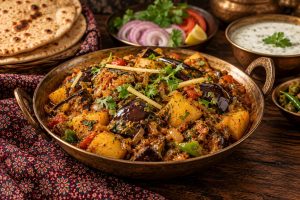
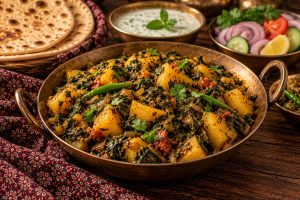
Bhindi Pyaz
بھنڈی پیاز
Uncovered pan-cooked okra with softly golden onions
A Pakistani home-style dry okra sabzi that lets sliced onion remain prominent. Okra is dried and cooked uncovered first, then folded through softened onion and a small amount of tomato.

Total includes 3 min of passive time described in the preparation and method. One tablespoon = 15 ml; one teaspoon = 5 ml.
About Bhindi Pyaz
A Pakistani home-style dry okra sabzi that lets sliced onion remain prominent. Okra is dried and cooked uncovered first, then folded through softened onion and a small amount of tomato.
Personally cooked and tested by Zohair Fakhar for DailyLife.pk. Cooking times can vary with your stove, cookware and batch size; follow the texture and doneness cues in the method.
Make it work for your kitchen
Also known as Bhindi Pyaz Sabzi, Okra with Onions.
Original quantities serve 4. Cooking times, pan size and frying-oil depth do not scale, cook in extra batches instead.
Before you start
Dry the okra and prepare the masala vegetables
Measure the ingredients for your selected servings. Wash the whole okra and dry it thoroughly on a clean towel before trimming and slicing. Slice the onion, dice the tomato and mince the ginger; keep optional chilli and herbs separate. Have a wide frying pan and a clean plate ready for the okra, which cooks separately before joining the onion masala.
No heat · included in preparation timeSet up the equipment
Have the following tools ready before starting: Kitchen scale and measuring spoons; Heavy-bottomed wide frying pan and flexible spatula; Knife and board; Plate to hold cooked components.
Clean workspaceMeasure the ingredients
Measure the ingredient quantities for your selected servings before applying heat. Keep separately listed groups, such as dough, filling, sauce or garnish, in separate containers; keep any optional additions separate.
Use the ingredient list aboveCheck allergens and substitutions
Check ingredient labels and any substitutions against these notes: No major allergens intentionally added; check spice blends and cross-contact
Before cooking
Step-by-step cooking method
1 Wash, dry and cut the vegetables
Wash 600 g whole okra and dry completely before trimming and cutting.
2 Wash, dry and cut the vegetables (continued)
Slice 320 g onion, chop 130 g tomato and mince 10 g ginger. Keep optional chilli and herbs ready.
3 Cook okra without crowding
Heat about two-thirds of the 48 g oil over medium-high in a wide pan. Cook okra uncovered in two batches, about 6–8 minutes each, until less sticky and tender at the thickest pieces; move to a plate.
4 Soften the abundant onion
Add remaining measured oil to the pan. Briefly sizzle 4 g cumin, then stir-fry 320 g onion over medium 7–9 minutes, letting it soften with light golden edges without burning.
5 Make a lightly coated masala
Add 10 g ginger for 30 seconds, followed by 130 g tomato, 2 g turmeric, 6 g coriander, optional 2 g chilli, optional 8 g green chilli and 6 g salt.
6 Make a lightly coated masala (continued)
Cook uncovered 5–7 minutes until moist but not watery.
7 Combine gently
Return okra and fold carefully into onion masala. Cook uncovered 3–4 minutes until piping hot and evenly seasoned. Cook longer only if the thicker pieces remain firm.
8 Finish and serve
Off heat add optional 3 g amchur and 12 g coriander. Rest 3 minutes. Serve with chapati separately; bread is excluded from nutrition.
Chef’s tips
- Taste at the end and adjust optional chilli cautiously.
- Cooking and resting times depend on actual doneness, batch size and equipment.
Common mistakes & quick fixes
- Slimy okra
- Dry pods before slicing and fry uncovered in two uncrowded batches.
- Onion becomes bitter
- Reduce heat if edges brown before the centres soften.
- Watery sabzi
- Cook tomato down before returning okra.
Variations & serving ideas
Variation: For a milder version omit green and red chillies.
Variation: A small optional amchur finish gives a sharper taste.
Variation: Serve with roti and plain yogurt (not included in nutrition).
Perfect result check
| Check | Okra is cooked and recognisable in pieces |
|---|---|
| Check | Soft onions remain visible |
| Check | No watery pool under the sabzi |
Storage & reheating
| Fridge | 3–4 days | Cool and refrigerate Place in shallow covered containers and refrigerate within 2 hours (1 hour if ambient temperature is above 32°C). Keep at 4°C or colder; use within 3–4 days. |
|---|---|---|
| Freezer | Freeze promptly cooled portions in sealed containers and thaw in the fridge. The okra and onion become softer after thawing, so fresh preparation gives the best texture. | |
| Reheating | Reheat throughout to 74°C/165°F, checking the centre with a food thermometer. Use a wide pan over moderate heat and turn gently; add only a small splash of water if needed to prevent catching. Reheat only the amount needed. |
Know when to change the heat
| Stage | Heat | What to look for |
|---|---|---|
| Cook the okra in batches | Medium-high, uncovered | Let surface moisture escape and turn gently until the thicker pieces soften. Lower the heat if surfaces darken before the centres are tender. |
| Onion masala and final combination | Medium, uncovered | Onions soften with lightly golden edges and tomato reduces until moist rather than watery. Fold cooked okra through briefly until evenly hot. |
Helpful answers before you cook
Can I make it ahead?
Yes. Refrigerate promptly in shallow containers and reheat only the portion needed. The okra is best freshly cooked because it softens during storage. Reheat gently in a wide pan and turn carefully; follow the centre-temperature check in the storage section.
Why cook the okra separately from the onion masala?
The first uncovered stage lets moisture escape from the okra while it softens. Separately reducing the onion-tomato base prevents the okra from sitting in a wet sauce for its entire cooking time. Fold the two together near the end and avoid vigorous stirring that breaks the pieces.
How do I keep bhindi pyaz from becoming too sticky?
Wash the whole okra first and dry it completely before cutting. Use a wide pan and cook in batches so the pieces do not crowd and steam. Keep the method uncovered and let the tomato base reduce before returning the okra. Some natural stickiness can remain; do not compensate by repeatedly adding oil.