Besan Halwa
بیسن کا حلوہ
Gently roasted besan with ghee and cardamom milk
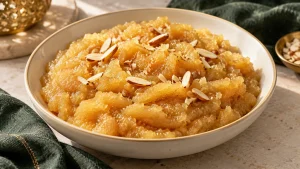
Pakistani-style gram-flour halwa slowly roasted in ghee until nutty, then enriched with cardamom-flavoured milk. The version here is soft and spoonable; khoya-rich and firmer family variations also exist.

One tablespoon = 15 ml; one teaspoon = 5 ml.
About Besan Halwa
Pakistani-style gram-flour halwa slowly roasted in ghee until nutty, then enriched with cardamom-flavoured milk. The version here is soft and spoonable; khoya-rich and firmer family variations also exist.
Personally cooked and tested by Zohair Fakhar for DailyLife.pk. Cooking times can vary with your stove, cookware and batch size; follow the texture and doneness cues in the method.
Make it work for your kitchen
Also known as Besan ka Halwa, Gram Flour Halwa.
Original quantities serve 4. Cooking times, pan size and frying-oil depth do not scale, cook in extra batches instead.
Before you start
Before you start
Weigh and sift Sift 180 g besan and weigh 125 g sugar and 90 g ghee. None 4 min Warm the liquid Combine 400 ml milk, 120 ml water and 4 crushed cardamom pods in a separate saucepan. None 3 min Set up garnishes Measure optional 15 g almonds and 15 g pistachios; set aside. None 3 min
Set up the equipment
Have the following tools ready before starting: Heavy nonstick or thick-bottomed 3 L pan; Small saucepan; Whisk or silicone spatula; Heatproof ladle.
Clean workspaceMeasure the ingredients
Measure the ingredient quantities for your selected servings before applying heat. Keep separately listed groups, such as dough, filling, sauce or garnish, in separate containers; keep any optional additions separate.
Use the ingredient list aboveCheck allergens and substitutions
Check ingredient labels and any substitutions against these notes: Milk/dairy; nuts if optional garnish is used
Before cooking
Step-by-step cooking method
1 Heat the cardamom milk
Warm 400 ml milk with 120 ml water and green cardamom pods, lightly crushed cracked pods until steaming, approximately 4 minutes.
2 Heat the cardamom milk (continued)
Do not boil away liquid; hold hot.
3 Melt ghee and roast besan
Melt 90 g ghee in a heavy pan, then add 180 g sifted besan.
4 Melt ghee and roast besan (continued)
Stir constantly over low to medium-low heat for 12–15 minutes until golden and aromatic; scrape bottom and corners.
5 Dissolve the sugar
Stir in 125 g sugar until evenly distributed, approximately 1 minute; keep heat low to avoid scorching.
6 Add liquid in stages
With heat on low, pour hot cardamom milk in four small additions, stirring vigorously after each. Expect sputtering; keep hands clear of steam. Stir out any clumps.
7 Cook to a glossy halwa
Cook and stir another 4–6 minutes until besan tastes fully cooked, mixture is glossy and moves as a soft mass. Add a measured splash of hot water if overly stiff.
8 Rest and garnish
Switch off heat and rest 2 minutes; remove cardamom husks if desired. Sprinkle optional almonds and pistachios just before serving four portions.
Chef’s tips
- Besan roasted too fast tastes burnt before it cooks through.
- If the halwa firms during service, loosen gently with a tablespoon of hot milk or water.
- Mark nuts optional in labels and nutrition.
Common mistakes & quick fixes
- Raw gram-flour flavour
- Continue slow roasting while stirring; do not compensate with extra sugar.
- Dry, greasy clumps
- Add warm liquid gradually while whisking.
- Burnt base
- Use heavy cookware and low heat; burnt besan cannot be rescued.
Variations & serving ideas
Khoya-rich: A separate richer regional version uses khoya; it requires new quantities and nutrition validation.
Lower sweetness: Reduce sugar to 95 g after testing the flavour balance.
Without nuts: Omit garnish and update allergen notes.
Perfect result check
| Check | Taste and texture Fully cooked with the intended texture and no raw flour or hard centre. |
|---|---|
| Check | Serving Four approximately equal portions, garnishes served separately where optional. |
Storage & reheating
| Cooling | Refrigerate promptly | Cooling Transfer leftovers to shallow containers; refrigerate within 2 hours, or 1 hour above 32°C. |
|---|---|---|
| Fridge | 3–4 days | Keep the milk-based halwa at 4°C or below and use within 3–4 days. Store in a clean sealed container; the halwa firms as it chills. |
| Freezer | Freeze promptly cooled portions in sealed containers and thaw in the fridge. The texture may become denser or separate slightly; stir gently during reheating. | |
| Reheating | Reheat only the amount needed to 74°C/165°F, stirring and checking the centre with a food thermometer. Use low heat and add a small splash of milk or water if needed to loosen the halwa. |
Know when to change the heat
| Stage | Heat | What to look for |
|---|---|---|
| Heat the cardamom milk | Medium-low heat | Warm the measured cardamom milk and water until steaming. Avoid boiling away the liquid; keep it hot for gradual addition. |
| Melt ghee and roast besan | Low to medium-low heat | Stir the besan continuously in melted ghee, scraping the base and corners, until golden and aromatic. Lower the heat if it darkens quickly. |
| Dissolve the sugar | Low heat | Stir the sugar through the roasted flour over low heat without letting the base scorch. |
| Add liquid in stages | Low heat | Add hot liquid gradually over low heat and stir after each addition. Keep hands clear of steam and sputtering. |
| Cook to a glossy halwa | Low heat | Keep stirring until the mixture becomes glossy and moves together as a soft mass, with no dry flour pockets. Loosen gradually if it becomes too stiff. |
| Rest and garnish | No heat | Rest briefly off the heat, remove visible cardamom husks if desired and add optional nuts near serving. |
Helpful answers before you cook
Can I use chickpea flour?
Use the fine gram flour specified in the ingredient list. Coarser flour and products made from a different chickpea variety can absorb liquid and develop texture differently. Sift out lumps before roasting and follow the colour and aroma cues instead of assuming every flour will behave identically.
Why is my halwa grainy?
Lumps often form when the hot liquid hits the roasted flour too quickly or is not mixed through evenly. Keep the heat low and add it gradually while stirring, taking care around steam and splashes. A slightly granular besan texture differs from dry flour clumps; do not raise the heat sharply to force them out.
Can this be made in a pressure cooker?
No. The essential step is controlled roasting in an open pan.
What if the halwa becomes too stiff?
It thickens as the flour hydrates and again as it cools. Over low heat, stir in a small splash of hot water or milk until it returns to a soft, spoonable mass. Add gradually so it does not become runny. If using extra milk, keep the milk allergen in mind and account for it in any later nutrition estimate.