Aloo Beans
آلو بینز
Stovetop recommended; pressure-cooker method not verified
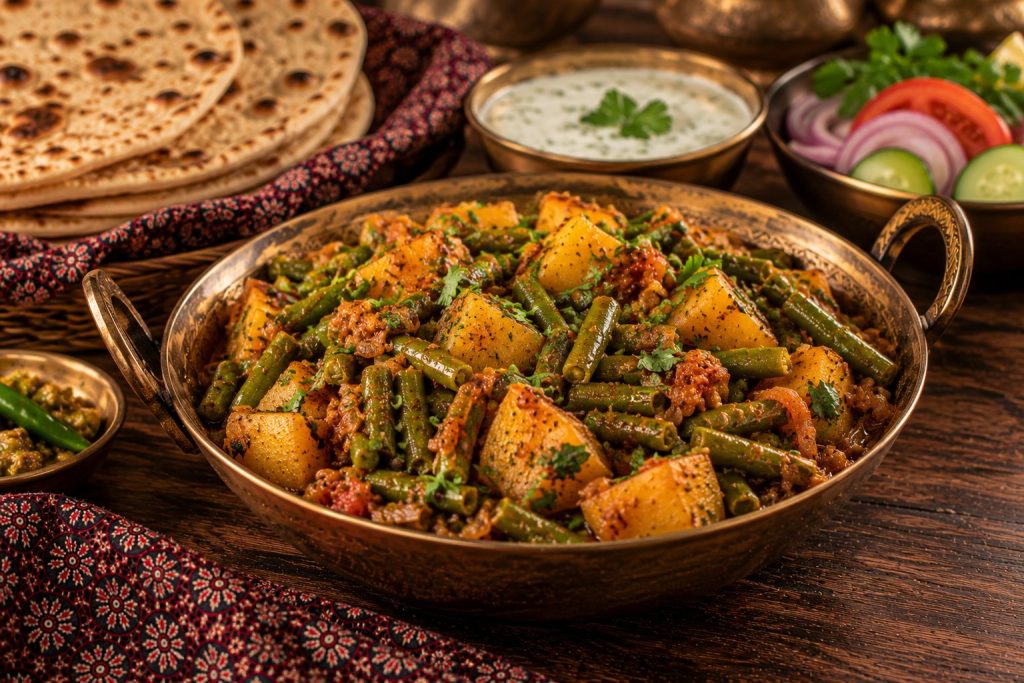
A dry-style Pakistani potato and green bean sabzi with cumin, turmeric and a light masala. Potatoes should be tender while beans remain pleasantly structured, never stringy or raw.
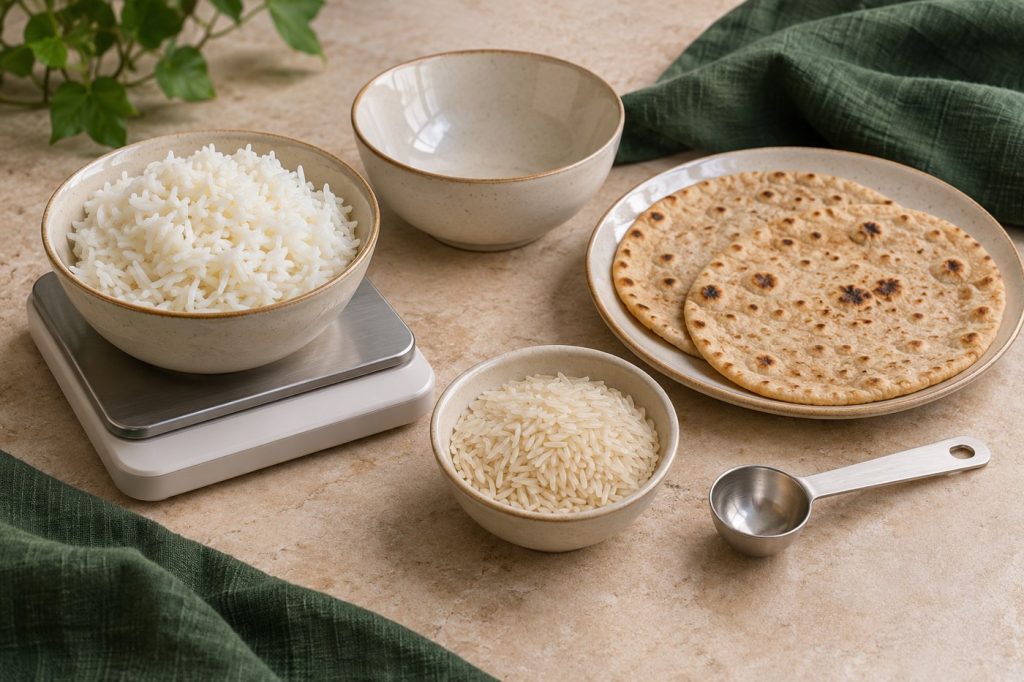
Total includes 5 min of passive time described in the preparation and method. One tablespoon = 15 ml; one teaspoon = 5 ml.
About Aloo Beans
A dry-style Pakistani potato and green bean sabzi with cumin, turmeric and a light masala. Potatoes should be tender while beans remain pleasantly structured, never stringy or raw.
Personally cooked and tested by Zohair Fakhar for DailyLife.pk. Cooking times can vary with your stove, cookware and batch size; follow the texture and doneness cues in the method.
Make it work for your kitchen
Also known as Aloo Phali, Aloo Beans Sabzi, Potato Green Beans.
Original quantities serve 4. Cooking times, pan size and frying-oil depth do not scale, cook in extra batches instead.
Before you start
Before you start
Read the recipe and measure ingredients Wash, trim and dry the vegetables, measure aromatics and spices, and put a heavy lidded pan on the hob. No soaking required. None Included in preparation time
Set up the equipment
Have the following tools ready before starting: Heavy-bottomed lidded saucepan; Wide sauté pan, wooden spoon and ladle; Colander, measuring jug and kitchen scale.
Clean workspaceMeasure the ingredients
Measure the ingredient quantities for your selected servings before applying heat. Keep separately listed groups, such as dough, filling, sauce or garnish, in separate containers; keep any optional additions separate.
Use the ingredient list aboveCheck allergens and substitutions
Check ingredient labels and any substitutions against these notes: No major allergens intentionally included; verify spice cross-contact
Before cooking
Step-by-step cooking method
1 Trim beans and cut potatoes
Remove bean ends and any tough strings. Slice 420 g beans into 2.5 cm pieces and 480 g potatoes into 1.5 cm cubes, then ready onion and tomato.
2 Start cumin and onion
Heat 38 g oil over medium in a wide lidded pan; add 5 g cumin for 20 seconds, then 135 g onion.
3 Start cumin and onion (continued)
Cook 5–7 minutes until pale golden, then add 12 g ginger and 14 g garlic for 40 seconds.
4 Coat the potatoes
Add potatoes, 2 g turmeric, 6 g coriander, optional 2 g chilli and 7 g salt.
5 Coat the potatoes (continued)
Toss 3 minutes, then add 160 g tomato and optional 8 g chilli and cook 3 more minutes until pulpy.
6 Give potatoes a head start
Pour in 140 ml water. Cover and cook on low for 7–9 minutes, stirring once, until the potatoes begin to soften but are not fully tender.
7 Add and cook the green beans
Add beans, cover and cook on low 9–12 minutes. Check thickest bean and potato pieces; both must be cooked. Remove lid for the last 2–4 minutes if liquid remains, stirring gently.
8 Finish dry-style
Turn off heat and fold through optional 3 g amchur and 12 g coriander. Rest 5 minutes. Serve with roti (not included in nutrition).
Chef’s tips
- Trim mature beans thoroughly; allowing diced potatoes a head start keeps the beans from becoming dull and overcooked.
- Adjust free liquid based on actual absorption and pan evaporation; do not scale cooking time automatically.
- Taste salt and chilli at the end; adjust gradually.
Common mistakes & quick fixes
- Beans too tough
- Trim strings and cook longer covered with a splash of hot water.
- Potatoes collapsing
- Use even dice and avoid vigorous stirring.
- Watery finish
- Finish uncovered until excess water evaporates.
Variations & serving ideas
Variation: Use frozen cut green beans if thawed and drained; actual cook time may vary.
Variation: Omit optional dry mango for a milder finish.
Variation: Serve with roti and dahi separately.
Perfect result check
| Check | Potato cubes are fully tender |
|---|---|
| Check | Beans are cooked and no tough strings remain |
| Check | Sabzi is lightly coated, not swimming in liquid |
Storage & reheating
| Fridge | 3–4 days | Refrigerate promptly in shallow portions at 4 °C/40 °F or colder, within 2 hours of cooking or 1 hour above 32 °C/90 °F. Do not wait for a large pan to cool completely on the counter. |
|---|---|---|
| Freezer | Freeze in meal-sized portions | Freeze promptly in labelled, airtight portions. Potatoes and beans may soften on thawing, so fresh cooking gives the best texture. Thaw in the fridge and reheat only the portion needed; freezing does not rescue food left out too long. |
| Reheating | 74 °C/165 °F throughout | Warm the portion in a covered pan with a small splash of water if dry, stirring gently. Check several places with a food thermometer and reach 74 °C/165 °F throughout, including the centre of the potato pieces. |
Know when to change the heat
| Stage | Heat | What to look for |
|---|---|---|
| Medium | See cooking steps | Softening onion or brief sauté. |
| Low | See cooking steps | Gentle lentil simmer to avoid catching. |
Helpful answers before you cook
Can I make this ahead?
Yes. Divide the cooked sabzi into shallow containers and refrigerate promptly rather than leaving the full pan out to cool. Keep at 4 °C/40 °F or colder and use within the 3–4-day storage window. Reheat only the portion needed, stirring carefully so the potatoes do not break; add a little water if the pan is dry.
Can I use a pressure cooker?
Use the covered stovetop method given here so you can check the potatoes before adding the beans. Do not transfer this recipe’s small water allowance directly to a pressure cooker: its minimum liquid, loading and release instructions depend on the model. For a pressure-cooker version, follow a suitable recipe and your appliance manual.
What if the potatoes are still firm when the beans are ready?
Cut the potatoes into the small, even dice specified in the method and give them the covered head start before adding the beans. If they are still firm later, add a small splash of water and cover over low heat until a fork enters the centre easily. Stir gently. Next time, check the potatoes have begun to soften before adding the beans, rather than using the timer alone.