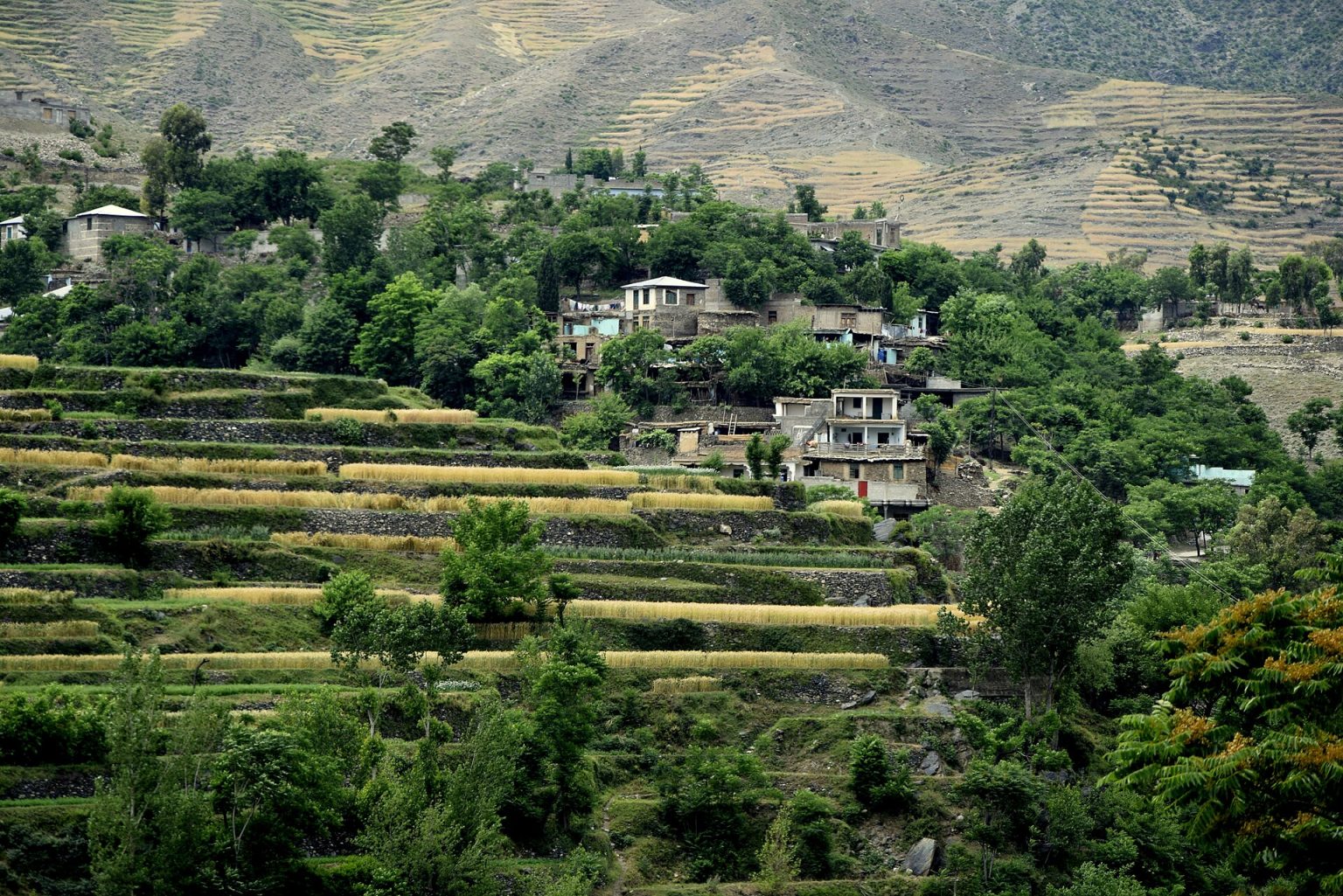
Golden wheat fields near Timergara in Lower Dir, Khyber Pakhtunkhwa

Economy

Agriculture in Pakistan: CropsCanals and Livestock

Wheat, rice, cotton and sugarcane watered by one of the world's great canal systems, and a livestock sector bigger than all crops combined: how Pakistan farms, and the pressures it faces.

  • Rabi and Kharif seasons
  • Indus Basin canal irrigation
  • Figures for FY2025-26

Wheat fields near Timergara, Khyber Pakhtunkhwa

23.4%Agriculture's share of GDPPakistan Economic Survey 2025-26
33.1%Share of employment in agriculturePakistan Economic Survey 2025-26
62.4%Livestock's share of agricultural value addedPakistan Economic Survey 2025-26
2.89%Agriculture growth in FY2025-26 (1.53% in FY2025)Pakistan Economic Survey 2025-26

The Farm Economy

Agriculture is woven into Pakistan's economy, landscape and culture. The fertile plains of Punjab and Sindh, watered by the Indus and its tributaries, grow the wheat that makes the daily roti, the rice that fills export containers, the cotton that feeds the textile mills and the sugarcane that supplies crushing mills each winter. Orchards in Khyber Pakhtunkhwa, Balochistan and Gilgit-Baltistan add fruit, while across the country millions of households keep buffaloes, cattle, goats and sheep.

According to the Finance Division's Pakistan Economic Survey 2025-26, agriculture accounted for 23.4% of GDP and 33.1% of employment. The sector grew 2.89% in FY2025-26, up from 1.53% the year before, despite damage to summer crops from the 2025 floods. It also supplies raw materials for industry, most obviously cotton for textiles, Pakistan's largest export sector, and its health shapes food prices for everyone.

The Survey divides the sector into four parts: crops (split into 'important crops' and 'other crops'), livestock, fisheries and forestry. The surprise for many readers is that livestock, not crops, is the largest.

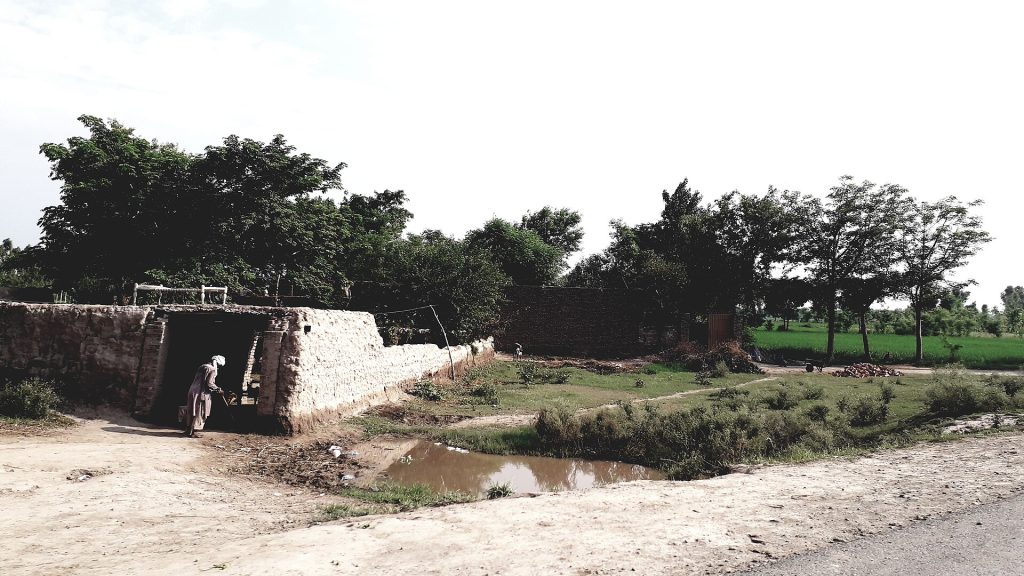
Green farmland and crop fields in rural Pakistan
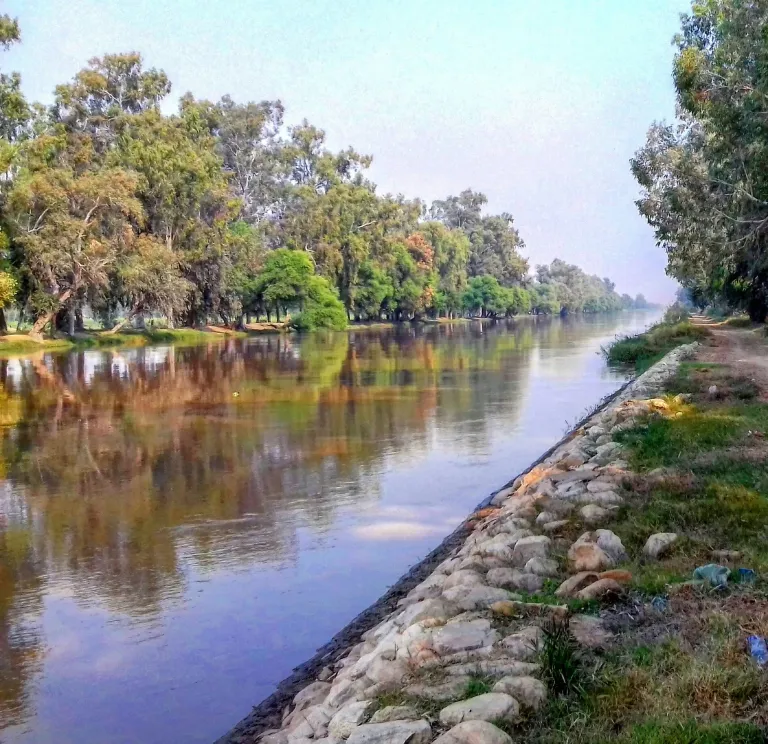
Farmland in Pakistan: most cultivation depends on water from the Indus river system.

Two Growing Seasons

Rabi (winter crops)

Sown in autumn and harvested in spring. Wheat is the dominant Rabi crop and the country's staple food grain; gram (chickpea), lentils, mustard and other oilseeds are also grown. The spring wheat harvest, the subject of countless festivals and folk songs, is a national event.

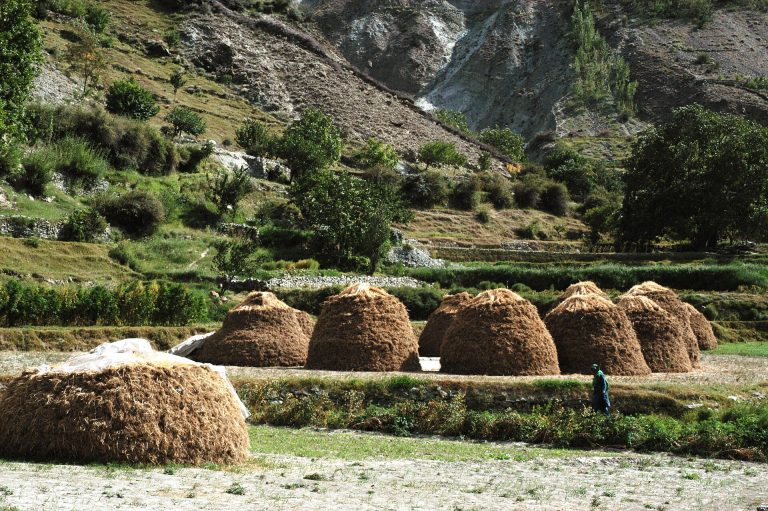
Villagers harvesting wheat at Chirah in Bagrote Valley, Gilgit-Baltistan

Kharif (summer crops)

Sown with the summer heat and monsoon and harvested in autumn. Rice, cotton, sugarcane and maize are the main Kharif crops. Their fortunes depend heavily on river flows, monsoon rains and, increasingly, on extreme weather such as floods and heatwaves.

Major Crops, FY2025-26

CropProductionChange on FY2025Notes
Wheat29.61 million tonnes+4.3%Area 9.48 million ha (+4.4%); the main Rabi staple
Rice9.99 million tonnes+2.8%Yield up 6.6%; an important export, including basmati
Cotton7.05 million bales−0.5%Area 2.01 million ha (−1.5%); key raw material for textiles
Sugarcane89.45 million tonnes+6.2%Area 1.22 million ha (+2.4%)
Maize8.79 million tonnes−2.7%Area 1.59 million ha; widely used for feed and starch

Source: Pakistan Economic Survey 2025-26, Chapter 2 (Agriculture), Finance Division. Figures are provisional and may be revised.

How the Sector Breaks Down

Important cropsWheat, rice, cotton, sugarcane and maize: 17.32% of agricultural value added (4.06% of GDP). Growth was just 0.65% in FY2025-26 after flood losses to Kharif crops.
Other cropsPulses, vegetables, fruit, oilseeds and fodder: 15.64% of agricultural value added (3.67% of GDP), growing 2.43%.
Livestock62.4% of agricultural value added and 14.6% of GDP, growing 3.75%, milk, meat, hides and draught power from millions of small herds.
FisheriesMarine fishing off the Sindh and Balochistan coasts plus inland fish farming: 1.29% of agriculture (0.30% of GDP), growing 1.66%.
ForestryTimber, firewood and non-timber products: about 0.5% of GDP, growing 2.02%.

The Indus Irrigation System

Little of Pakistan's farmland could be cropped intensively on rainfall alone. What makes it productive is the Indus Basin Irrigation System, a network built up from the colonial-era canal colonies of Punjab and Sindh and greatly expanded after independence. The Indus Waters Treaty of 1960 with India allocated the western rivers, the Indus, Jhelum and Chenab, to Pakistan and led to new storage dams and link canals to move water across the plains.

An FAO technical paper from the early 2000s describes the system as built around three major reservoirs, Tarbela and Chashma on the Indus and Mangla on the Jhelum, with 19 barrages, 12 inter-river link canals and more than 40 canal commands feeding tens of thousands of watercourses. Farmers supplement canal water with groundwater from tubewells, which has expanded rapidly and is now under strain in many areas.

Water is tight. The Economic Survey records 92.0 million acre-feet (MAF) available at canal heads across Kharif 2025 (60.6 MAF) and Rabi 2025-26 (31.4 MAF), about 11% below the system's 103.5 MAF average usage. Sharing that water fairly between provinces and between head and tail of each canal is a constant political and practical challenge.

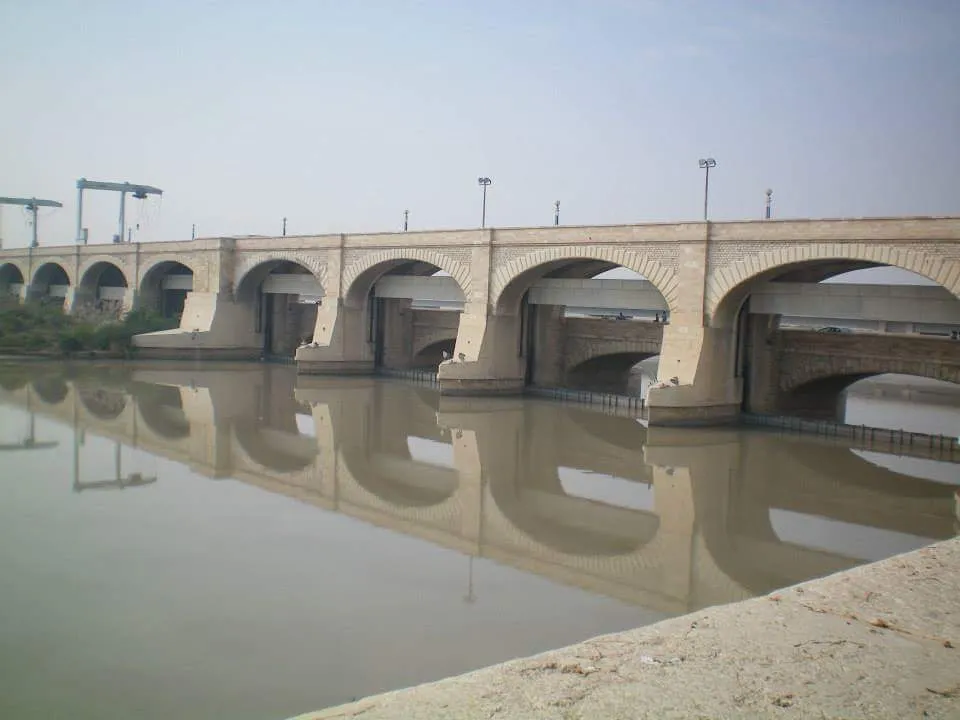
The arches of the Sukkur Barrage across the Indus
Sukkur Barrage on the Indus, one of the headworks that divert river water into Sindh's canals.

Livestock: The Biggest Part of Farming

For many rural families, animals are a savings account, a source of daily milk and a cushion against a failed harvest. Buffaloes and cattle supply most of the milk; goats and sheep provide meat and are central to Eid al-Adha; camels remain important in the deserts of Sindh, Punjab and Balochistan. Livestock grew 3.75% in FY2025-26, steadier than crops.

The Economic Survey's estimates for 2025-26 put the herd at about 62.0 million cattle, 49.1 million buffaloes, 91.8 million goats and 33.5 million sheep. The 7th Agricultural Census (2024-25), now the new baseline, counted somewhat differently, 55.8 million cattle, 47.7 million buffaloes, 95.8 million goats and 44.5 million sheep, a reminder that livestock numbers are hard to measure precisely.

Credit and Inputs

Agricultural credit

Rs 2,161.6 billion, Jul–Mar FY2026

Banks and lenders disbursed about 15% more than a year earlier, 71% of the annual target of roughly Rs 3,062 billion.

Fertiliser

3,795 thousand tonnes of nutrients

Offtake in July–March FY2026 rose 11.4%, dominated by nitrogen (3,035 thousand tonnes), with phosphate at 712 and potash at only 48 thousand tonnes.

Water

92.0 MAF in 2025-26

About 11% below average system usage, making efficient irrigation a priority.

Weather

Monsoon 2025 22.6% above normal

The wet monsoon brought floods; the winter that followed was drier than normal.

Challenges Facing Pakistani Agriculture

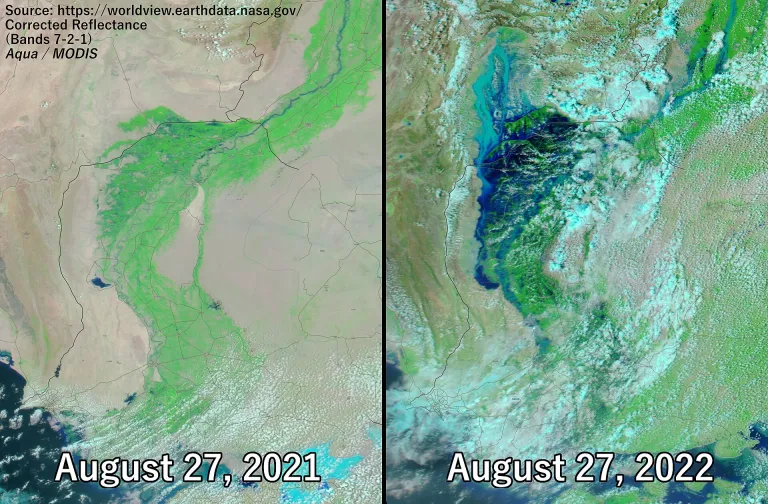
  • Climate stress: floods in 2022 and 2025, heatwaves and erratic rainfall damage crops and livestock, and glacier-fed river flows are becoming less predictable.
  • Water scarcity and waste: water at canal heads is below average, much is lost in unlined channels, and groundwater is being pumped faster than it recharges in many districts.
  • Low yields: many crops yield well below their potential due to seed quality, late sowing, soil degradation and limited mechanisation.
  • Small and fragmented farms: most farmers work small plots, with limited access to formal credit, storage and markets.
  • Soil salinity and waterlogging affect irrigated land in parts of the Indus plains.
  • Price and policy swings: changes in support prices, procurement and trade policy can leave farmers exposed, especially for wheat and sugarcane.
  • Cotton under pressure: its area fell again in FY2025-26 (down 1.5%), with knock-on effects for the textile industry that depends on it.

Where the Figures Come From

Numbers on this page are from the Pakistan Economic Survey 2025-26 (Finance Division, June 2026), which draws on the Pakistan Bureau of Statistics and provincial crop reporting services. Fiscal years run July to June. Survey figures are provisional and are often revised by the National Accounts Committee; check the latest Survey and PBS releases for updates.

Frequently Asked Questions

What share of Pakistan's economy is agriculture?

According to the Pakistan Economic Survey 2025-26, agriculture accounts for 23.4% of GDP and 33.1% of employment.

What are Pakistan's main crops?

Wheat, rice, cotton, sugarcane and maize are the 'important crops'. In FY2025-26 wheat production was 29.61 million tonnes, rice 9.99 million tonnes, cotton 7.05 million bales, sugarcane 89.45 million tonnes and maize 8.79 million tonnes.

Is livestock bigger than crops in Pakistan?

Yes. Livestock contributes 62.4% of agricultural value added and 14.6% of GDP, more than all crops combined, according to the Economic Survey 2025-26.

What are Rabi and Kharif?

Pakistan's two cropping seasons. Rabi crops such as wheat are sown in autumn and harvested in spring; Kharif crops such as rice, cotton, sugarcane and maize are sown in summer and harvested in autumn.

Where does Pakistan's irrigation water come from?

Mainly from the Indus and its tributaries through the Indus Basin Irrigation System of reservoirs (Tarbela, Mangla, Chashma), barrages and canals, supplemented by groundwater from tubewells.

How we know this

  • Type Practical guide
  • Sources 4 (3 official/academic)
  • Reviewed October 2026
  • Disputed points None

Rules and fees change, confirm with the official links below before you act.

4 sources
  1. Pakistan Economic Survey 2025-26, Chapter 2: Agriculture, Finance Division, Government of Pakistan
  2. Pakistan Economic Survey 2025-26 (chapter index), Finance Division, Government of Pakistan
  3. Highlights of the Pakistan Economic Survey 2025-26, Finance Division, Government of Pakistan
  4. The use of irrigation systems for sustainable fish production in Pakistan (Indus Basin Irrigation System overview), Food and Agriculture Organization of the United Nations
Photo credits (6)
Suggest a correction

Stay updated

Stay Connected with DailyLife.pk

Get new travel guides, recipes and stories from across Pakistan, no spam, unsubscribe any time.

Your Pakistan journey starts here

From majestic mountains to vibrant cities, rich cuisine to timeless traditions — discover the real Pakistan with DailyLife.pk.